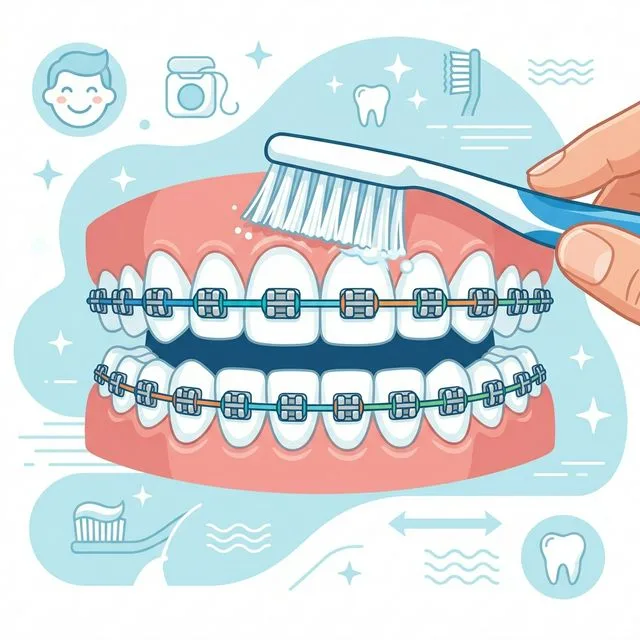
Getting braces is a major investment in your smile. But here's the frustrating reality: braces make brushing significantly harder right when good brushing matters most. Brackets, wires, and bands create dozens of tiny food traps that a standard brushing technique simply can't reach.
The result? Up to 50% of orthodontic patients develop white spot lesions — permanent chalky marks on their enamel that appear the day braces come off. The irony of paying thousands for a straighter smile only to reveal damaged enamel underneath is devastating. But it's entirely preventable with the right technique.
Why Brushing Matters More With Braces
Without braces, your teeth have relatively smooth surfaces that are easy to clean. Braces change everything:
- Brackets create ledges where plaque accumulates above and below each one
- Wires trap food in places you can't see or easily reach
- Elastic bands and ligatures collect bacteria at every contact point
- Rough bracket surfaces give plaque more texture to grip onto
Research shows plaque accumulation is 2–3 times higher in braces patients compared to non-braces patients, even with the same brushing frequency. That's why orthodontists recommend brushing after every meal — not just twice a day.
The consequences of poor brushing with braces include cavities between brackets, gum inflammation (which can actually slow down tooth movement), bad breath, and those dreaded white spot lesions.
Essential Tools You Need
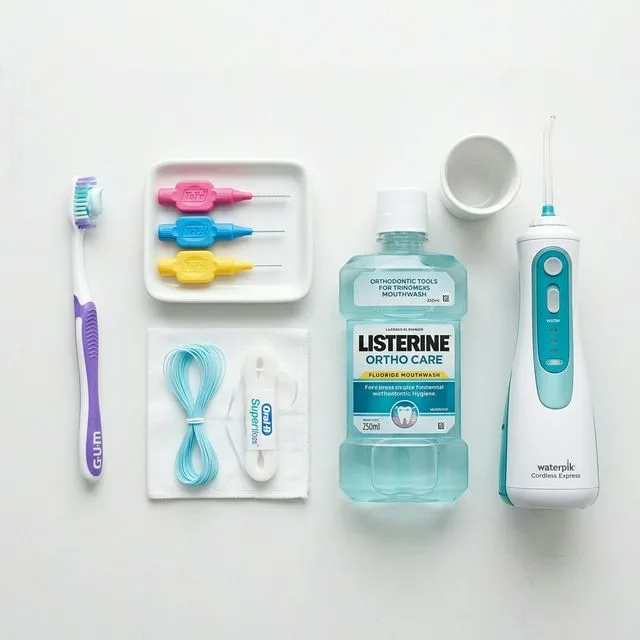
| Tool | Purpose | Cost | Priority |
|---|---|---|---|
| Soft-bristle toothbrush | General brushing around brackets | $3–$5 | Essential |
| Interdental brush | Between brackets and under wires | $4–$8 | Essential |
| Floss threader or Superfloss | Threading floss under archwire | $3–$6 | Essential |
| Fluoride mouthwash | Reaches areas brushing misses | $5–$8 | Highly recommended |
| Water flosser | Flushing debris from hard-to-reach spots | $30–$80 | Highly recommended |
| Orthodontic wax | Covering brackets that irritate cheeks | $3–$5 | As needed |
Don't skip the interdental brushes. They're small enough to clean around each bracket and under wires where a regular toothbrush bristle physically cannot reach. Many orthodontists consider them more important than regular floss during treatment.
Step-by-Step Brushing Technique
Forget the fast back-and-forth scrubbing motion. With braces, you need to be methodical and slow. Here's the exact technique orthodontists recommend:
Step 1: Rinse first
Before picking up your toothbrush, swish water vigorously around your mouth for 10–15 seconds. This dislodges large food particles stuck in wires and brackets, making brushing far more effective.
Step 2: Start with the gumline (45° angle)
Place your toothbrush at a 45-degree angle toward the gumline — the area ABOVE the brackets on upper teeth. Use small circular motions, spending 2–3 seconds on each tooth. This is the area most people miss, and it's where gum disease starts.
Step 3: Brush the brackets directly
Angle the toothbrush straight onto each bracket. Brush with a gentle back-and-forth motion to clean the bracket surface and the tooth directly behind it. You should hear a slight squeaking if the bracket is clean.
Step 4: Brush below the brackets
Now angle the brush UPWARD at 45° to clean the tooth surface between the bracket and the biting edge. This area is just as prone to plaque as the gumline.
Step 5: Clean the chewing surfaces and insides
Brush the chewing surfaces and the tongue-side (lingual) surfaces of all teeth normally. These areas aren't directly affected by brackets but still need thorough cleaning.
Step 6: Interdental brush between brackets
Thread an interdental brush (Christmas-tree shaped) under the archwire and between each bracket. Push it gently in and out 2–3 times per gap. This removes the plaque your toothbrush simply can't reach.
Step 7: Rinse with fluoride mouthwash
Finish with a fluoride mouthwash (like ACT or Listerine Total Care). Swish for 30–60 seconds. The fluoride helps remineralize any early enamel damage and reaches every crevice around your braces.
Flossing With Braces
Flossing with braces takes patience. You can't simply slide floss down between teeth because the archwire blocks it. Here are your options:
- Floss threaders: Thread a loop of floss under the archwire, then floss normally between teeth. Takes about 10–15 minutes for a full mouth. Tedious but effective.
- Superfloss: Has a stiff end for threading, a spongy section for cleaning around brackets, and regular floss. Slightly easier than threaders.
- Water flosser: The easiest option. A Waterpik on medium pressure flushes debris from around brackets and between teeth in about 2 minutes. Studies show it removes up to 3x more plaque around braces than regular floss. If you can afford one, get one.
- Orthodontic floss picks: Special picks designed to slide under archwires. Faster than threaders but less thorough.
Floss at least once daily — ideally before your bedtime brushing session. If you're new to braces, the flossing routine will feel extremely slow at first. It gets faster with practice.
Common Mistakes to Avoid
- Brushing too hard: Aggressive brushing bends bracket wings, pops off elastic ties, and causes gum recession. Use gentle pressure — let the bristles do the work.
- Skipping after meals: Twice a day isn't enough with braces. Brush after every meal. If you can't brush, at least rinse vigorously with water.
- Using a hard-bristle brush: Hard bristles damage brackets and enamel. Always use soft or extra-soft.
- Ignoring the gumline: Most people focus on the brackets and forget the gumline. Gum disease during braces treatment can extend your total treatment time.
- Not replacing your brush often enough: Braces destroy toothbrush bristles faster. Replace every 1–2 months (or as soon as bristles splay).
- Skipping the interdental brush: A regular toothbrush physically cannot clean between brackets and under wires. Interdental brushes aren't optional — they're essential.
Electric vs. Manual Toothbrushes
Both work, but electric toothbrushes have a clear advantage for braces patients. Studies show:
- Oscillating-rotating brushes (Oral-B) remove up to 100% more plaque around brackets than manual brushing
- Sonic brushes (Sonicare) create fluid dynamics that clean slightly beyond the bristle tips
- Built-in timers ensure you brush long enough (a critical issue — most people stop too soon)
- Pressure sensors prevent brushing too hard, protecting brackets
If you use an electric brush, use the sensitive/ortho mode and an orthodontic brush head. Don't press the vibrating head against brackets — the vibration does the cleaning for you. Consider the overall investment in your braces — a $40–$80 electric toothbrush is a smart addition to protect that investment.
White Spots: The Biggest Risk
White spot lesions are areas of enamel decalcification — where acid from plaque dissolves minerals from the tooth surface. They appear as opaque, chalky white squares where brackets were bonded.
The statistics are sobering:
- Up to 50% of orthodontic patients develop at least one white spot
- They can appear in as little as 4 weeks of poor brushing
- They're most common on upper front teeth (the teeth people see first when you smile)
- Mild white spots may partially remineralize; severe ones are permanent
Prevention is entirely about consistent, thorough brushing and fluoride use. If your orthodontist mentions early signs of decalcification, take it seriously and upgrade your hygiene routine immediately. In severe cases, your orthodontist may recommend removing braces early rather than risk further enamel damage.
If white spots do develop, options include professional fluoride varnish, teeth whitening (to blend surrounding enamel), microabrasion, or in severe cases, veneers to cover the damage.
Daily Oral Hygiene Schedule With Braces
| Time | Action | Duration |
|---|---|---|
| Morning (after breakfast) | Full brush + interdental brush + mouthwash | 5 min |
| After lunch | Quick brush + water rinse | 3 min |
| After snacks | Water rinse (minimum) | 30 sec |
| Evening (before bed) | Full brush + floss/water flosser + interdental + mouthwash | 8–10 min |
Yes, it's a lot more effort than brushing without braces. But it's temporary — most braces treatments last 18–24 months. The extra 10 minutes per day is absolutely worth avoiding permanent enamel damage.
Frequently Asked Questions
You should brush at least 3 times a day with braces — after every meal. Ideally, brush after any snack as well. Food gets trapped in brackets and wires far more easily than with bare teeth, so the standard twice-a-day recommendation isn't enough during orthodontic treatment.
Yes, electric toothbrushes are excellent with braces. Oral-B and Sonicare both have orthodontic-friendly heads. Use the brush on a low or sensitive setting and let the bristles do the work — don't press hard against brackets. Studies show electric brushes remove up to 100% more plaque around brackets than manual brushing.
Poor brushing with braces leads to white spot lesions (permanent enamel decalcification marks), cavities between brackets, gum inflammation (gingivitis), bad breath, and potential staining. These white spots appear as chalky squares where brackets were and are often permanent — they're the most common complication of orthodontic treatment.
Brush for at least 3–4 minutes with braces, compared to the standard 2 minutes without braces. Each tooth surface needs individual attention — above the bracket, below the bracket, and the bracket itself. Use a timer or electric toothbrush with a built-in timer to ensure adequate brushing duration.
More Braces Articles
How to Know If You Need Braces
Signs, symptoms, and when to see an orthodontist
How Much Do Braces Cost in Texas?
Full cost breakdown by type, city, and insuranceRelated topics
- Gum Health Guide — Keeping gums healthy during orthodontic treatment
- Teeth Whitening Guide — Whitening after braces removal
- Fillings Guide — If cavities develop during treatment