I hear this question all the time, and it usually comes from one of two groups: parents who've noticed their kid's teeth coming in funky, or adults who've been living with a crooked smile and are finally wondering if they should do something about it.
Here's the honest answer: about 60% of people could technically benefit from orthodontic treatment. But "could benefit" and "need" are different things. Some alignment issues are purely cosmetic, while others are actively causing problems with your oral health. Let me walk you through how to tell the difference.
9 Signs You Might Need Braces
1. Your teeth are visibly crowded or overlapping
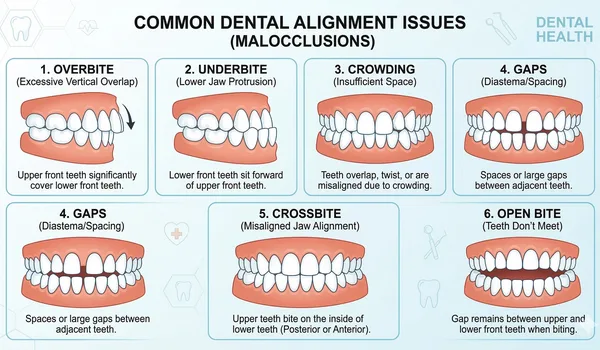
This is the most obvious one. If your teeth are so close together that they're overlapping, pushing each other sideways, or one is sitting in front of another, braces will almost certainly help. Crowding isn't just a looks thing — it makes flossing nearly impossible in the tight spots, which means plaque builds up, which leads to cavities and gum disease in those specific areas.
Run your tongue along the inside of your teeth. If you feel teeth sitting at weird angles or teeth that feel like they're behind other teeth, you've got crowding.
2. You have noticeable gaps between teeth
Spacing is the opposite problem from crowding, and it's just as treatable. Gaps can happen because of missing teeth, teeth that are too small for your jaw, or habits like tongue thrusting. Small gaps (1–2mm) between your front teeth are actually pretty common and don't always need treatment. But larger gaps, or gaps in multiple places, can affect your bite and allow food to get packed between teeth constantly.
3. Your bite feels "off" when you close your mouth
Close your mouth and bite down. Do your top teeth sit neatly over your bottom teeth? Now look in a mirror. You should see your upper teeth overlapping the lower ones by about 1–2mm — not too much, not too little. If something looks or feels off, you might have one of these bite issues:
- Overbite: Your top teeth stick out significantly over your bottom teeth (think "buck teeth")
- Underbite: Your bottom teeth sit in front of your top teeth
- Crossbite: Some upper teeth sit inside the lower teeth when you bite down
- Open bite: Your front teeth don't touch at all when your back teeth are closed
4. You bite your cheeks or tongue frequently
Everyone bites the inside of their cheek occasionally, but if it's happening multiple times a week — especially in the same spot — your teeth or bite alignment might be the culprit. Misaligned teeth can create spots where your cheek or tongue gets caught repeatedly, which can lead to painful sores.
5. You have difficulty chewing certain foods
If biting into an apple feels awkward, or you find yourself always chewing on one side because the other side doesn't line up right, that's a red flag. Your teeth are supposed to work together like a well-oiled machine. When the alignment is off, some teeth do way more work than they should, which wears them down faster.
6. Your jaw clicks, pops, or hurts
A misaligned bite can put stress on your temporomandibular joint (TMJ) — that's the hinge joint in front of your ear that opens and closes your mouth. If you hear clicking or popping when you chew, or if your jaw aches at the end of the day, a bite problem could be contributing. This doesn't automatically mean you need braces (jaw issues have lots of causes), but it's worth getting evaluated.
7. You breathe through your mouth most of the time
This one surprises people. Chronic mouth breathing in kids can actually cause orthodontic problems by changing the way the jaw grows. And in adults, mouth breathing is sometimes a sign that the jaw or palate is too narrow, which is something orthodontic treatment can address. If you or your child snores, sleeps with mouth open, or has chronically chapped lips, mention it at the orthodontist appointment.
8. You had a thumb-sucking habit as a child
Thumb sucking past age 4 or 5 frequently leads to orthodontic issues — often an open bite (where the front teeth flare outward and don't meet) or a narrow palate. If you or your child had a prolonged thumb or pacifier habit, an orthodontic evaluation is definitely a good idea, even if the teeth look okay on the surface.
9. Your teeth have shifted over time
Maybe your teeth were straight when you were younger, but they've gradually gotten more crowded as you've gotten older. This is incredibly common — teeth naturally drift forward throughout your life, and wisdom teeth coming in (or being removed) can accelerate the shift. If your teeth aren't where they used to be, an orthodontist can stop the movement and correct it.
The Quick Self-Check You Can Do Right Now
Grab a mirror and run through this checklist. It takes about two minutes:
- Smile wide. Do any teeth look crooked, rotated, or out of line? Are there obvious gaps?
- Bite down naturally. Do your front teeth overlap the bottom teeth by a lot (deep bite) or not at all (open bite)?
- Look at your side teeth. When you bite, do the top teeth sit outside the bottom teeth all the way around? Or do some top teeth tuck inside the lowers?
- Floss your teeth. Are there spots where floss won't fit at all, or areas where floss slides through with no resistance?
- Chew some food. Does it feel even on both sides? Do you naturally favor one side?
If you answered "yes" to two or more of these, scheduling a consultation with an orthodontist is probably a good idea. Most consultations are free.
Is There a "Right Age" for Braces?
The American Association of Orthodontists recommends a first orthodontic check-up by age 7. That seems early, and honestly, most 7-year-olds won't need braces yet. But some problems — like crossbites and severe crowding — are much easier to fix while the jaw is still growing.
Most kids get braces between ages 10 and 14. That's when most adult teeth have come in but the jaw is still growing, which gives the orthodontist the most to work with.
But here's the thing I always tell people: there's no maximum age for braces. I've seen patients in their 40s, 50s, and even 60s get beautiful results. The biology works at any age — moving teeth is moving teeth. It might take a few months longer for adults, but the results are just as good.
Braces as an Adult — Is It Too Late?
Absolutely not. About 25% of all orthodontic patients today are adults, and that number keeps growing. If you've been putting it off because you think braces are "just for kids," you're working with outdated information.
A few things that are different for adult braces patients:
- Treatment may take slightly longer (24–30 months vs. 18–24 for teens) because adult bone is denser
- Invisalign is very popular with adults who don't want visible brackets at work
- You might need to address other dental issues first — like gum disease, old fillings, or crowns that need replacing
- Insurance coverage may be limited — many plans only cover orthodontics for patients under 19
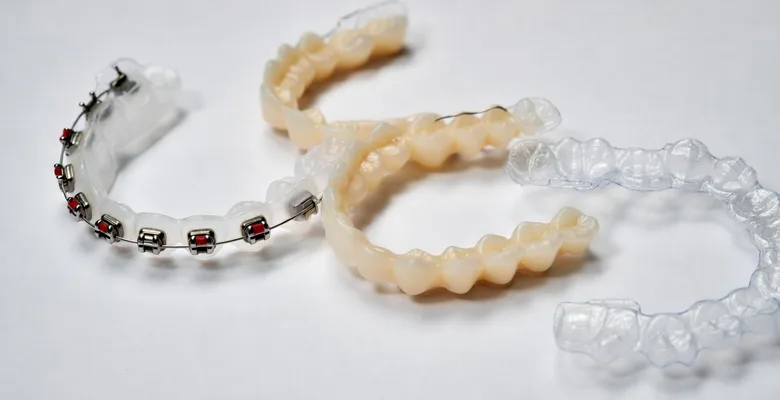
The biggest barrier for adults isn't biology — it's pride. People worry about how they'll look with braces in professional settings. That's why cosmetic alternatives like ceramic braces and Invisalign have become so popular. Ceramic braces are tooth-colored and barely visible from a few feet away. Invisalign is nearly invisible.
What Happens If You Don't Get Braces
Can you just live with crooked teeth? Sure. Plenty of people do. But there are some real consequences worth considering:
- Uneven tooth wear: When teeth don't line up, certain teeth bear more force than they should. Over decades, this can crack or chip teeth, wear down enamel unevenly, and cause premature tooth loss.
- Harder to clean: Crowded and overlapping teeth create hiding spots for plaque and food debris. This directly increases your risk of cavities and gum disease, even if you brush and floss religiously.
- Jaw problems: A bad bite can stress the TMJ over time, leading to chronic jaw pain, headaches, and even earaches.
- Ongoing shifting: Teeth keep moving your whole life. If your alignment is already off, it will likely get worse — not better — over time.
- Self-confidence: This one's personal. Some people genuinely don't care about having crooked teeth. Others hide their smile in every photo. If it affects your confidence, that alone is reason enough to look into treatment.
What to Expect at Your First Orthodontist Visit
If you've decided to go for a consultation, here's what typically happens so you're not walking in blind:
- Paperwork (5 min) — Medical history, dental history, your concerns
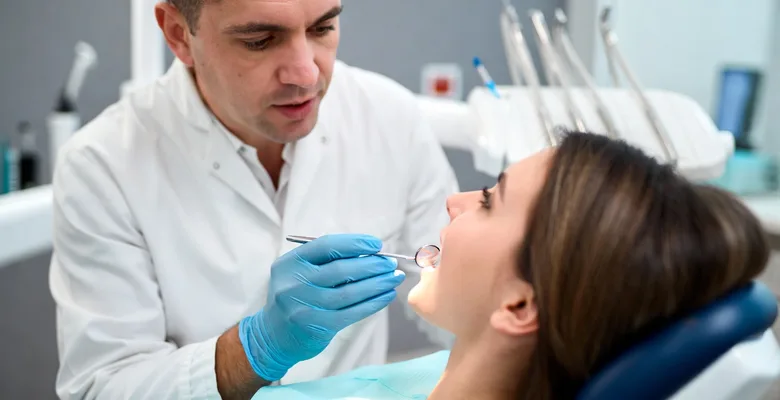
- Examination (10–15 min) — The orthodontist looks at your teeth, jaw, and bite
- X-rays and photos (10 min) — A panoramic X-ray shows all your teeth, roots, and jaw bones. Some offices do a 3D scan with an iTero scanner instead of messy impressions
- Discussion (10–15 min) — The orthodontist explains what they see, whether treatment is recommended, what options you have, and the estimated timeline
- Cost estimate (5 min) — You'll get a breakdown of the total cost, insurance coverage, and payment plan options
The whole thing takes 30 to 45 minutes. Most orthodontists offer this initial consultation for free. Don't feel pressured to commit on the spot — it's totally normal to get two or three opinions before deciding.
Your Options Beyond Traditional Braces
If the idea of metal brackets makes you cringe, you've got options. Here's a quick rundown:
| Option | Visibility | Best For | Cost Range |
|---|---|---|---|
| Metal braces | Very visible | All cases, kids & teens | $3,500–$5,500 |
| Ceramic braces | Barely visible | Adults wanting less visible brackets | $4,000–$6,500 |
| Invisalign | Nearly invisible | Mild to moderate cases | $3,500–$7,500 |
| Lingual braces | Completely hidden | Anyone who wants zero visible hardware | $6,000–$10,000 |
For more details on pricing, check out our breakdown of braces costs in Texas — or our full braces guide for a deep dive into every option.
Frequently Asked Questions
Ready to explore your options?
Read Our Complete Braces & Orthodontics Guide →