- The Honest Truth About "Healing" Cavities
- Cavity Stages: Which Ones Can You Actually Reverse?
- How Remineralization Works
- What Actually Works (Evidence-Based)
- What Doesn't Work (Despite What the Internet Says)
- What Your Dentist Can Do Without a Drill
- Preventing Cavities So You Never Need a Filling
- FAQ
I get why people search for this. Dental work is expensive, the drill is scary, and wouldn't it be amazing if you could just fix the problem at home? The internet is full of "natural cavity healing" articles promising that coconut oil and bone broth can regrow your teeth.
I'm going to be straight with you: most of that is nonsense. But — and this is important — there is a narrow window where early-stage decay can be reversed without a filling. Let me explain exactly when that's possible and when you're just wasting time.
The Honest Truth About "Healing" Cavities
Your teeth are not like skin. They don't regenerate tissue the way a cut on your arm heals. Once tooth structure is lost — once there's an actual hole — it's gone forever. No food, no supplement, no home remedy can rebuild a broken tooth.
But tooth enamel can be strengthened and repaired at the microscopic level through a process called remineralization. This only works when:
- The decay hasn't broken through the enamel surface
- There's no visible hole or brown/black spot
- The area shows as a "white spot lesion" — a chalky, opaque white patch on the tooth
Think of it like rust on a car. If you catch surface rust early, you can treat it and stop it from spreading. But once it's rusted through the metal and there's a hole, you need body work — no amount of rust treatment is going to fill that hole back in.
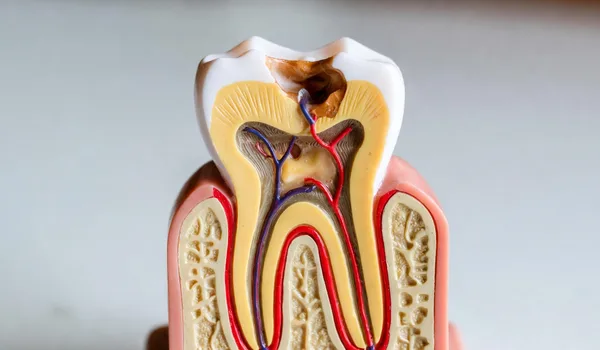
Cavity Stages: Which Ones Can You Actually Reverse?
| Stage | What It Looks Like | Reversible? | Treatment |
|---|---|---|---|
| Stage 1: Demineralization | White/chalky spots on enamel, no hole | ✅ Yes | Fluoride, improved hygiene, diet changes |
| Stage 2: Enamel decay | Small hole or rough area in enamel | ❌ No | Small filling |
| Stage 3: Dentin decay | Larger hole, may be sensitive to hot/cold | ❌ No | Filling or crown |
| Stage 4: Pulp involvement | Pain, possible abscess | ❌ No | Root canal + crown |
| Stage 5: Abscess | Severe pain, swelling, infection | ❌ No | Root canal or extraction |
See the pattern? There's exactly one stage where you can avoid the drill. After that, the options only get more invasive and more expensive.
How Remineralization Works
Your teeth are constantly in a tug-of-war between two processes:
- Demineralization: Acids (from bacteria feeding on sugar, or from acidic foods) dissolve minerals out of your enamel
- Remineralization: Minerals from your saliva (calcium, phosphate) and from fluoride get deposited back into the enamel
When demineralization wins, you get decay. When remineralization wins, you don't. It's really that simple.
Your goal is to tip the balance toward remineralization. That means reducing acid attacks (less sugar, less frequent snacking) and boosting the mineral supply (fluoride, calcium, good saliva flow).
What Actually Works (Evidence-Based)
These are backed by real dental research, not blog posts selling supplements:
1. Fluoride — the single most effective tool
Fluoride is not controversial in the scientific community, despite what you might read online. It's the most studied, most proven cavity-prevention agent we have. Fluoride works by:
- Replacing lost minerals in weakened enamel (remineralization)
- Making enamel more resistant to future acid attacks
- Inhibiting bacterial metabolism (bacteria produce less acid)
What to do: Brush twice daily with fluoride toothpaste (at least 1000 ppm fluoride — check the label). If you're at high risk for cavities, ask your dentist about prescription-strength fluoride toothpaste (5000 ppm) or professional fluoride varnish treatments.
2. Reduce sugar frequency (not just amount)
This is where most people get it wrong. It's not really about how much sugar you eat — it's about how often. Every time sugar hits your teeth, bacteria produce acid for about 20 to 30 minutes. So sipping a sugary drink over 2 hours is way worse than drinking it in 5 minutes, even if it's the same amount of sugar.
What to do: Limit snacking between meals. If you're going to have something sweet, have it with a meal rather than by itself. Drink sugary or acidic beverages through a straw. Rinse with water after eating.
3. Hydroxyapatite toothpaste
This is the newer option that's gotten a lot of attention. Hydroxyapatite (HAp) is the actual mineral that makes up tooth enamel. Toothpastes containing nano-hydroxyapatite can deposit this mineral directly onto demineralized areas. Studies from Japan (where it's been used since the 1980s) show it's comparable to fluoride for remineralization.
What to do: Look for toothpaste containing at least 10% nano-hydroxyapatite. Popular brands include Boka, Apagard, and RiseWell. You can use it instead of or alongside fluoride toothpaste.
4. Xylitol
Xylitol is a sugar alcohol that cavity-causing bacteria (Streptococcus mutans) can't digest. When bacteria try to eat xylitol, they essentially starve. Studies show that regular xylitol use (6–10 grams per day) can reduce cavity-causing bacteria by up to 70%.
What to do: Chew xylitol gum after meals (look for at least 1g xylitol per piece). Use xylitol mints. Some mouthwashes also contain xylitol.
5. Proper brushing and flossing technique
I know, not exciting. But the reality is that most cavities happen in two places: between teeth (where you don't floss) and in the grooves of back teeth (where you don't brush thoroughly enough). If you're skipping flossing, you're leaving 35% of your tooth surfaces uncleaned.
What Doesn't Work (Despite What the Internet Says)
I want to be respectful here because I know people are genuinely looking for alternatives. But I'd rather be honest than make you feel good while your cavity gets worse:
❌ Oil pulling
Swishing coconut oil for 20 minutes might reduce some bacteria in your mouth, but there is zero evidence it can reverse a cavity. The American Dental Association does not recommend it as a substitute for brushing or as a cavity treatment. If you enjoy it as an add-on to regular brushing, go for it — but it's not going to heal a hole in your tooth.
❌ Bone broth / collagen supplements
Drinking bone broth won't remineralize your teeth. Your digestive system breaks down collagen into amino acids, and those amino acids get distributed throughout your body — they don't selectively go to your teeth. Good nutrition supports overall health, but it won't reverse existing decay.
❌ Vitamin D and K2 alone
Vitamin D and K2 are important for overall bone health, and severe vitamin D deficiency can affect tooth development in children. But taking supplements won't heal a cavity you already have. It's a prevention tool, not a treatment.
❌ "Cavity healing" diets
Some popular books promote grain-free, sugar-free diets as a way to "heal" cavities. Cutting sugar will absolutely slow down or prevent new decay, and that's great. But the idea that dietary changes alone can fill in a hole that's already formed? That's not supported by evidence.
What Your Dentist Can Do Without a Drill
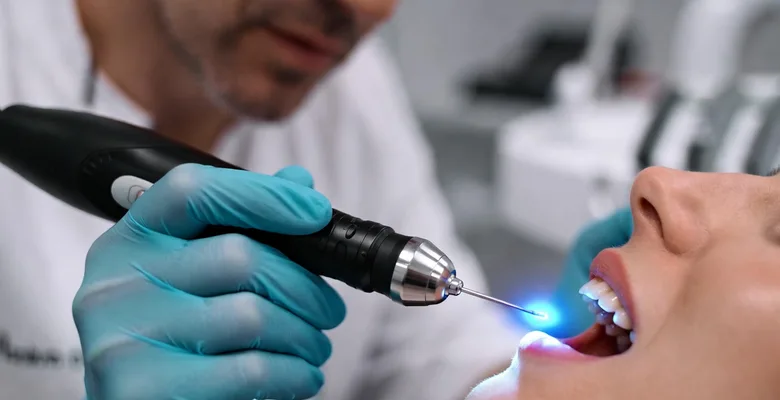
If you're avoiding the dentist because you hate the drill, here's some good news — modern dentistry has options for early cavities that don't involve drilling at all:
- Silver Diamine Fluoride (SDF): A liquid applied to the cavity surface that stops decay in its tracks. It's painless and takes 30 seconds. The downside? It stains the decayed area black, so it's mostly used on back teeth or baby teeth.
- Resin infiltration (ICON): A resin material that seeps into demineralized enamel and hardens it from within. Great for white spots and very early cavities between teeth. No drilling, no anesthesia.
- Professional fluoride varnish: Concentrated fluoride painted onto your teeth 2–4 times a year. Much stronger than anything you can buy over the counter.
- Sealants: A thin protective coating painted into the grooves of back teeth to prevent cavities. Usually done on kids but works for adults too.
Preventing Cavities So You Never Need a Filling
The best cavity treatment is never getting one in the first place. Here's what actually works for prevention:
- Brush twice a day with fluoride toothpaste — two minutes each time, especially before bed
- Floss daily — it cleans the 35% of tooth surface your brush can't reach
- Limit snacking frequency — every snack is an acid attack on your teeth
- Drink water instead of soda/juice — or at least rinse with water after acidic drinks
- Chew xylitol gum — after meals when you can't brush
- See your dentist every 6 months — catching problems early means simpler, cheaper treatment
- Don't ignore sensitivity — if a tooth starts hurting with cold or sweets, that's your early warning system
Frequently Asked Questions
Want to learn more about fillings and cavity prevention?
Read Our Complete Fillings & Cavities Guide →