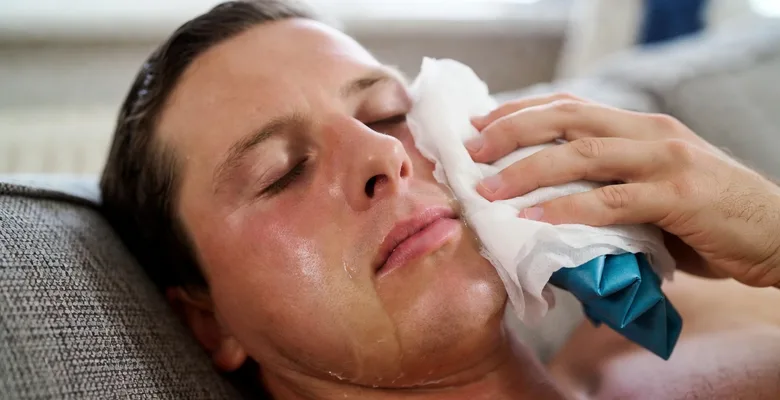
Your face looks like you're hiding golf balls in your cheeks. I know — it's alarming the first time you see it in the mirror. But here's the reassuring truth: post-surgical swelling is a completely normal part of healing. It's your body sending fluids and immune cells to the surgical sites to repair the tissue.
The question isn't whether you'll swell (you will), but how much you can minimize it. And the answer depends almost entirely on what you do in the first 24 hours after surgery.
Swelling Timeline: What to Expect
| Day | Swelling Level | What You'll Notice |
|---|---|---|
| Day 0 (surgery day) | Mild | Slight puffiness, may not be visible yet |
| Day 1 | Moderate | Noticeably swollen, cheeks filling out |
| Day 2–3 | Peak ⚠️ | Maximum swelling — this is normal, don't panic |
| Day 4–5 | Decreasing | Visibly improving each day |
| Day 6–7 | Minimal | Most swelling gone, face looks normal |
| Day 7–10 | Resolved | Any remaining puffiness barely noticeable |
Key insight: Swelling always gets worse before it gets better. Waking up on day 2 more swollen than the night before does NOT mean something went wrong. This is the normal pattern.
The Right Way to Ice (Most People Do This Wrong)
Icing is the most effective swelling reducer, but timing and technique matter:
The first 24 hours are everything
Ice works by constricting blood vessels, which limits the amount of fluid that flows to the surgical area. But this only works during the early inflammatory phase. After 24 to 48 hours, the swelling is already established and ice won't do much.
The correct schedule
- 20 minutes on, 20 minutes off — repeat throughout the day
- Apply ice to both sides simultaneously if all 4 teeth were removed
- Wrap ice or cold packs in a thin towel — never put ice directly on skin
- Continue this cycle for the entire first 24 hours, as much as you can tolerate
- Don't skip the off periods — constant icing can damage skin and underlying tissue
After 48 hours: switch to heat
Once swelling has peaked (around day 2–3), warm compresses are more effective than ice. A warm, damp washcloth held against the cheek for 20 minutes helps increase blood flow, which helps your body reabsorb the fluid faster. This is the opposite strategy from day 1 — and most people don't know about the switch.
8 Proven Ways to Reduce Swelling
1. Ice packs (first 24 hours)
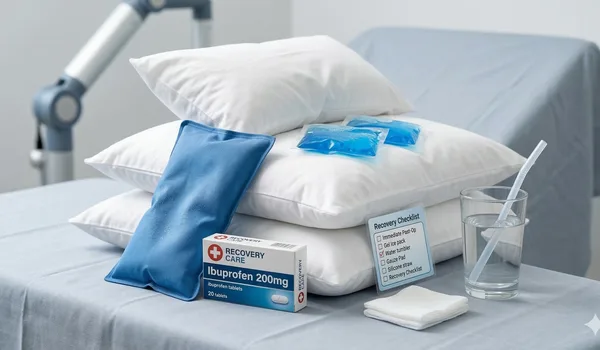
Covered in detail above. This is your #1 tool. The more consistently you ice during the first day, the less you'll swell overall. Some oral surgeons give you special jaw wraps that hold cold packs in place, which makes this much easier.
2. Keep your head elevated
Sleep propped up on 2–3 pillows or in a recliner for the first 2–3 nights. When your head is above your heart, gravity limits fluid from pooling in your face. Lying flat significantly increases facial swelling — you'll notice the difference immediately.
3. Take ibuprofen on a schedule
Don't wait until it hurts to take medication. Ibuprofen is an anti-inflammatory that prevents swelling from building up. Take 400–600mg every 6 hours for the first 3 days, whether you feel pain or not. Stay ahead of the inflammation instead of chasing it.
4. Stay hydrated
Dehydration worsens swelling and slows healing. Drink plenty of water, clear broths, and electrolyte drinks. Avoid straws for the first 5–7 days — the suction can dislodge blood clots and cause dry socket.
5. Gentle salt water rinses (after 24 hours)
Starting the day after surgery, gently swish with warm salt water (1/2 teaspoon salt in 8 oz water) after meals. Don't swish aggressively — let the water flow gently around your mouth and drool it out. Salt water reduces bacteria and helps with localized swelling.
6. Eat anti-inflammatory foods
Your diet for the first few days will be soft foods anyway, so make them count:
- Smoothies (no straw) with berries, spinach, and protein powder
- Mashed avocado — loaded with anti-inflammatory healthy fats
- Yogurt — cold, soft, and contains probiotics
- Bone broth — warm (not hot), nutritious, and easy to sip
- Mashed sweet potatoes — anti-inflammatory and filling
7. Avoid physical activity
No exercise, heavy lifting, or bending over for 3 to 5 days. Physical activity raises your blood pressure and heart rate, which pumps more blood to the surgical area and increases swelling. A short, slow walk is fine. But don't hit the gym, go for a run, or do anything that gets your heart pumping hard.
8. Don't smoke
Smoking restricts blood flow to the healing area, delays recovery, and dramatically increases your risk of dry socket (the most common complication of wisdom teeth removal). If you smoke, try to abstain for at least 72 hours after surgery — one week is even better.
Best Medications for Swelling
| Medication | Anti-Swelling? | Dose | Notes |
|---|---|---|---|
| Ibuprofen (Advil) | ✅ Yes | 400–600mg / 6 hrs | Best OTC option — fights both pain + swelling |
| Naproxen (Aleve) | ✅ Yes | 220–440mg / 12 hrs | Longer lasting, take less often |
| Acetaminophen (Tylenol) | ❌ No | 500–1000mg / 6 hrs | Pain only, no anti-inflammatory effect |
| Dexamethasone (Rx) | ✅✅ Yes, strong | Prescribed by surgeon | Steroid given pre/post-surgery for complex cases |
What Makes Swelling Worse
- Lying flat — sleep elevated for the first 2–3 nights
- Heat on the face (first 48 hrs) — save warm compresses for after day 2
- Exercise — raises blood pressure and increases flooding to the area
- Smoking — constricts blood flow, delays healing
- Alcohol — thins blood, increases bleeding and swelling
- Hot foods/drinks — can increase blood flow to surgical area
- Spitting forcefully — creates pressure that can dislodge clots
- Bending over frequently — increases pressure in your head
When Swelling Is a Warning Sign
Normal swelling follows a predictable pattern: builds for 2–3 days, then starts going down. If your swelling doesn't follow this pattern, pay attention:
- Swelling that increases after day 3 — could indicate infection
- Fever over 101°F (38.3°C) — sign of infection
- Swelling spreading to neck or under eye — potentially serious infection
- Difficulty opening mouth more than 1 finger-width after day 5 — trismus that should be evaluated
- Pus or bad taste in mouth — infection requiring antibiotics
- Numbness that hasn't resolved after 24 hours — possible nerve issue (rare)
Call your oral surgeon or dentist immediately if you notice any of these. Most post-surgical infections are easily treated with antibiotics if caught early.
Frequently Asked Questions
Everything you need to know about wisdom teeth:
Read Our Complete Wisdom Teeth Guide →