Let me guess: your dentist put on a temporary crown 2 weeks ago and told you to come back for the permanent one, but life got in the way. Now it's been a month and you're wondering if you can just keep riding it out a while longer.
Short answer: you probably can for a few more weeks, but don't push your luck. Here's everything you need to know about how long that temporary is actually going to hold up.
How Long They're Built to Last
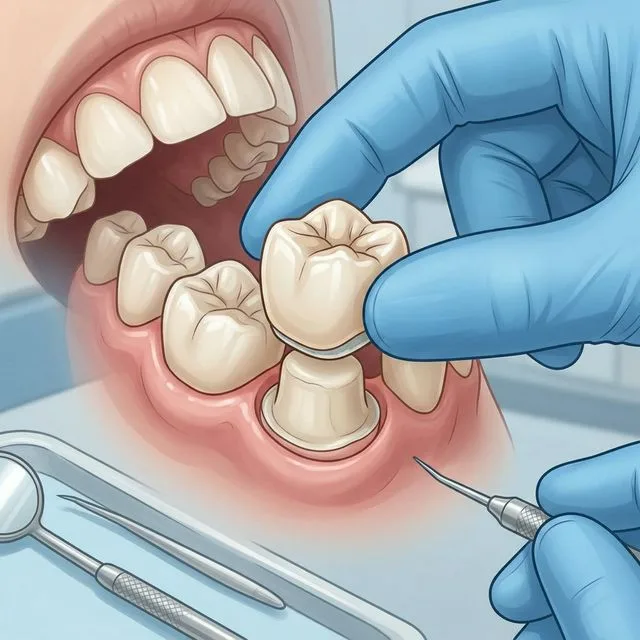
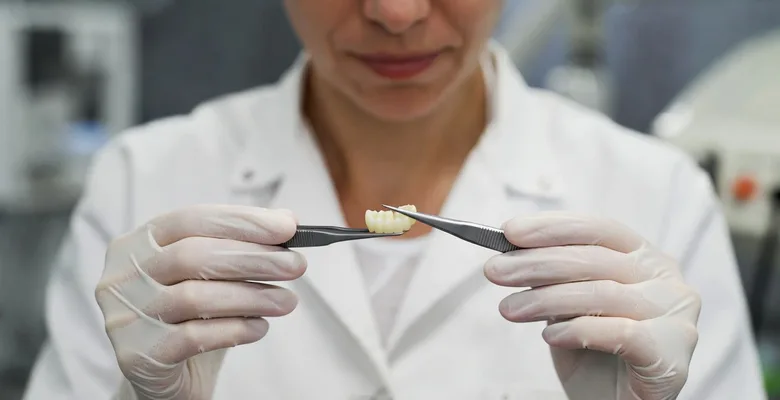
Temporary crowns are basically placeholder crowns. They're made from acrylic resin or stainless steel and attached with weak temporary cement — intentionally weak, because your dentist needs to be able to pop it off easily when your permanent crown arrives.
The design lifespan is 2 to 3 weeks. That's how long it typically takes for a dental lab to craft your permanent porcelain or zirconia crown. Some labs are faster (5 to 7 business days), and some more complex cases take up to 4 weeks.
| Timeframe | Risk Level | What to Expect |
|---|---|---|
| 0–3 weeks | ✅ Normal | This is what it's designed for. Should be comfortable and stable |
| 3–6 weeks | ⚠️ Caution | Cement starts weakening. Be extra careful with sticky/hard foods |
| 6–12 weeks | 🔴 Risky | Higher chance of falling off, decay underneath, or cracking |
| 3+ months | 🔴 Danger | Cement likely compromised. Bacteria growing underneath. Tooth may shift |
Can You Wear One Longer Than 3 Weeks?
In a perfect world, you'd get your permanent crown right on schedule. But I know that's not always realistic. Insurance delays, scheduling conflicts, needing a root canal before the permanent crown — things happen.
The honest answer: 4 to 6 weeks is usually fine if you take care of it. I've seen patients stretch a temporary crown for 2 to 3 months without major issues, but they got lucky. Every extra week increases your odds of complications.
If you know you'll need more time, tell your dentist. They can:
- Use stronger temporary cement
- Make a higher-quality temporary using a lab-made option instead of the chairside version
- Schedule you for a re-cementation partway through the wait
What Happens If You Keep It Too Long
Here's what can go wrong when you push a temporary crown past its expiration date:
Decay under the crown
This is the big one. Temporary cement isn't waterproof — it's designed to be easily removable. Over time, microscopic gaps form between the cement and tooth, and bacteria + saliva seep in. The decay happens on the prepared tooth surface, which has no enamel protection (it was shaved down for the crown). I've seen cases where patients left a temporary crown on for 6+ months and the tooth underneath was so decayed it had to be extracted.
The crown falls off
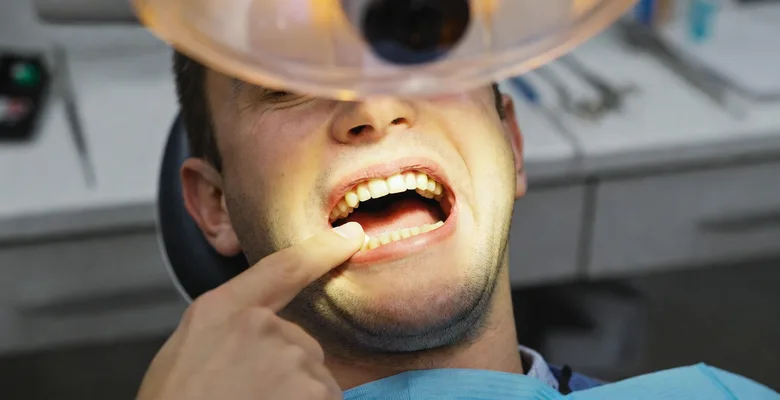
As the cement weakens, the temporary crown becomes loose and eventually pops off. This usually happens at the worst possible time — eating dinner, in a meeting, on vacation. It's not dangerous but it's annoying and leaves your prepared tooth exposed and sensitive.
Tooth movement
If the temporary crown falls off and you don't replace it quickly, the neighboring teeth can start to shift into the gap. When this happens, your permanent crown may not fit properly when you finally go in for the appointment, and the lab has to remake it (more time, possibly more cost).
Temporary crown breaks
Acrylic is nowhere near as strong as porcelain or zirconia. Temporary crowns crack, chip, and wear down faster than permanent ones. A cracked temporary with a sharp edge can irritate your tongue, cheek, or gums.

What to Do If Your Temporary Crown Falls Off
Don't panic. This is one of the most common dental "emergencies," and it's almost never actually an emergency. Here's what to do:
- Find the crown. Don't throw it away. Check your plate, the sink, wherever it might have landed.
- Clean it gently. Rinse it with warm water. Use a soft toothbrush to clean out any old cement from inside.
- Try it back on. It should slip back over the nub of your prepared tooth. Push it down gently — it should click into place.
- Stick it on temporarily. Use a small dab of denture adhesive (like Fixodent or Polygrip) or even a tiny amount of toothpaste inside the crown. This will hold it in place until you see your dentist.
- Call your dentist. They can re-cement it properly, usually in a quick 15-minute appointment.
Do NOT use super glue, household cement, or any other adhesive. These can damage the tooth and make it difficult for your dentist to properly seat the permanent crown later.
If you can't get the crown back on, keep the exposed tooth clean by gently brushing with a soft toothbrush. Avoid very hot or cold foods (the exposed tooth will be sensitive). See your dentist within a day or two.
How to Make Your Temporary Crown Last
Whether you're waiting 2 weeks or 6, these tips will keep your temporary in place:
- Avoid sticky foods: Caramel, taffy, chewing gum, gummy bears — these are the #1 cause of temporary crowns coming off
- Skip hard foods on that side: Ice, hard candy, popcorn kernels, raw carrots — chew these on the other side
- Be gentle when flossing: Instead of snapping the floss out between teeth, slide it out sideways so you don't pull on the crown
- Don't use that tooth to tear things: Opening packages, biting off thread, etc. (You probably shouldn't do that with any tooth, honestly)
- Brush gently: Regular brushing is fine, but avoid aggressive scrubbing around the temporary crown margins
Temporary vs. Permanent Crown: Key Differences
| Feature | Temporary Crown | Permanent Crown |
|---|---|---|
| Material | Acrylic resin or stainless steel | Porcelain, zirconia, gold, or PFM |
| Lifespan | 2–6 weeks | 10–25+ years |
| Strength | Moderate (fragile) | Very strong |
| Appearance | Decent, may not match exactly | Custom shade-matched, natural |
| Cement | Weak (easy removal) | Permanent dental cement |
| Cost | Included in crown treatment | $800–$1,500 per tooth |
Same-Day Crowns: Skip the Temporary Entirely
If temporary crowns stress you out, there's good news: many dental offices now offer same-day crowns using CEREC or similar CAD/CAM technology. Here's how it works:
- Your dentist prepares the tooth (same as usual)
- Instead of taking an impression, they use a 3D digital scanner
- A computer designs your crown on screen
- A milling machine carves the crown from a solid block of ceramic — right in the office
- Your permanent crown is cemented the same day
The whole process takes about 2 hours. No temporary crown, no second appointment, no waiting. The catch? Same-day crowns are usually made from a single block of ceramic, so they may not look quite as natural as multi-layered lab-crafted porcelain crowns. For back teeth this doesn't matter much. For front teeth, some patients still prefer the traditional lab route for the best cosmetics.
Not every dental office has this technology. Ask your dentist if they offer same-day crowns — especially if you have a busy schedule or if you're anxious about temporary crowns.
Frequently Asked Questions
Want to learn more about dental crowns?
Read Our Complete Dental Crowns Guide →