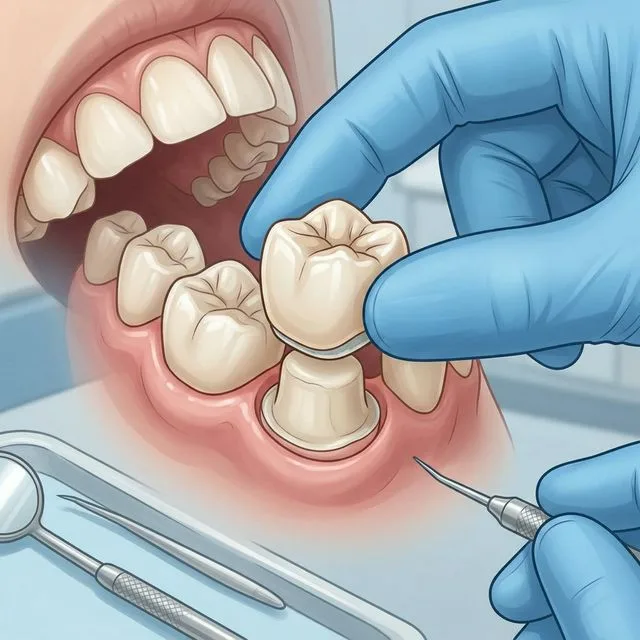
A crown falling off is one of those dental emergencies that always seems to happen at the worst possible time — Saturday night, while traveling, or right before a big event. The first question everyone asks: how much is this going to cost me?
The answer depends almost entirely on whether the crown can simply be glued back on (recementation) or whether you need a completely new crown. The price difference between these two scenarios is massive, so let's break it down.
Recementation: The Best-Case Scenario
If your crown popped off cleanly and both the crown and the underlying tooth are intact, your dentist can simply cement it back on. This is called recementation, and it's the cheapest and fastest fix.
| Service | Cost Without Insurance | Cost With Insurance | Time |
|---|---|---|---|
| Recementation | $100–$300 | $20–$80 | 15–20 minutes |
| Exam + X-ray (if needed) | $50–$150 | $0–$30 | 10 minutes |
| Emergency visit surcharge | $50–$200 | Varies | — |
So the total for a straightforward recementation is typically $150–$350 without insurance. With insurance, you might pay as little as $20–$80 out of pocket. Not bad at all.
The key word is "straightforward." Your dentist needs to verify there's no decay under the crown and that the crown still fits properly. If there's even a small gap, recementing a poor-fitting crown just delays a bigger (and more expensive) problem.
When You Need a New Crown Instead
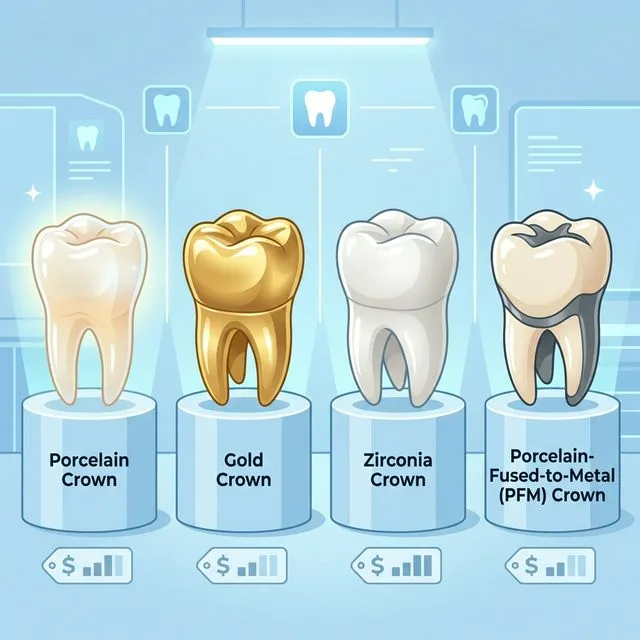
If the crown is cracked, the tooth underneath has decayed, or the fit is no longer right, recementation won't work. You'll need a brand new crown. Here's what that costs:
| Crown Material | Cost Range | Durability | Best For |
|---|---|---|---|
| Porcelain-fused-to-metal (PFM) | $800–$1,400 | 10–15 years | Back teeth where strength matters |
| All-ceramic/porcelain | $800–$2,000 | 10–15 years | Front teeth (best aesthetics) |
| Zirconia | $1,000–$2,500 | 15–20+ years | Any position (strongest ceramic) |
| Gold/metal alloy | $800–$2,500 | 20–30+ years | Back teeth (longest lasting) |
| Same-day CEREC | $1,000–$2,000 | 10–15 years | When time matters |
If your original crown was placed recently, there's a chance your dentist will redo it at a reduced cost or even free if it was a workmanship issue. Always ask — many dentists guarantee their crowns for 5–10 years. For a deeper dive into the full crown process and timeline, see our guide on how long it takes to get a crown.
What Affects the Price
1. The condition of the tooth underneath
This is the biggest factor. If the tooth stub (abutment) is healthy, recementation is straightforward. But if there's decay, the dentist needs to remove it first — sometimes requiring a filling or even a root canal before the crown can go back on. That can add $200–$1,500+ to the total cost.
2. The condition of the crown itself
Examine the crown carefully. Is it cracked? Chipped? Or did it come off in one clean piece? If the crown is intact, it can likely be recemented. A cracked or broken crown means a full replacement.
3. Your location
Dental costs vary significantly by region. A recementation in Manhattan might cost $300, while the same procedure in rural Texas might be $100. Urban areas with higher overhead charge more.
4. Emergency vs. scheduled visit
If your crown falls off on a weekend and you go to an emergency dental clinic, expect to pay $50–$200 extra. If you can wait until Monday (using temporary cement), you'll avoid the surcharge. If you're dealing with pain while waiting, our guide on managing tooth pain can help.
Insurance & Payment Options
Dental insurance handles crown reattachment differently depending on whether it's recementation or replacement:
| Procedure | Insurance Category | Typical Coverage |
|---|---|---|
| Recementation | Basic restorative | 60–80% covered |
| New crown | Major restorative | 50% covered |
| Core buildup (if tooth needs rebuilding) | Major restorative | 50% covered |
Important: the 5-year replacement rule. Most insurance plans won't cover a new crown on the same tooth if the original was placed within the last 5 years. If your crown falls off at year 4, insurance may only cover recementation, not a new crown — even if a new one is medically necessary. Some plans have 7 or even 10-year clauses.
Without insurance, ask about payment plans or dental discount programs. Many offices also offer 5–10% off for paying the full amount upfront.
Emergency DIY: What You Can Do at Home
Your crown fell off at 10 PM and you can't see a dentist until tomorrow. Here's what to do:
What TO do ✅
- Retrieve the crown — don't throw it away! Your dentist can likely recement it.
- Clean the crown gently with lukewarm water and a toothbrush.
- Try it back on — it should fit snugly. If it doesn't sit right, don't force it.
- Use temporary dental cement (Dentemp, Recapit, or similar) from any pharmacy. Apply a thin layer inside the crown and press it onto the tooth. Bite down gently for 2 minutes.
- Avoid chewing on that side until you see your dentist.
What NOT to do ❌
- Never use superglue, nail glue, or Gorilla Glue — these contain cyanoacrylate compounds that are toxic in the mouth, can damage enamel permanently, and make it harder for your dentist to properly recement later.
- Don't leave the tooth exposed for days — the prepared tooth is vulnerable to sensitivity, fracture, and drifting (adjacent teeth can shift).
- Don't eat sticky or hard foods on the exposed tooth or temporary fix.
Why Crowns Fall Off
Crowns don't just fall off for no reason. Understanding why it happened helps you (and your dentist) prevent it from happening again:
- Decay underneath: The most common reason. Bacteria seep under the crown margin, the tooth decays, and the crown loses its grip. This is why flossing around crowns is critical.
- Cement degradation: Dental cement doesn't last forever. After 10–15 years, the bond gradually weakens. Crowns placed with older cement formulations are more prone to this.
- Poor original fit: If the crown didn't sealed tightly to the tooth from day one, cement fills the gap but isn't strong enough long-term. This is often why crowns fail within the first 2 years.
- Bruxism (teeth grinding): Grinding generates tremendous lateral forces that slowly rock the crown loose. If you grind, a nightguard is essential to protect your crowns.
- Eating sticky foods: Caramels, taffy, and gummy candies can literally pull a crown off, especially if the bond was already weakening.
- Insufficient tooth structure: If too much of the original tooth was removed, there isn't enough surface area for the cement to grip. This may require a post-and-core buildup or even a dental implant if the tooth can't support a crown.
How to Prevent Crown Failure
- Floss around your crown daily — cavities at the crown margin are the #1 cause of failure
- Get a nightguard if you grind your teeth — $300–$500 to save a $1,500+ crown
- Avoid sticky foods that can pull the crown off
- Don't use your crowned tooth to bite hard objects (ice, pens, packaging)
- See your dentist every 6 months — they can catch early signs of cement failure or decay before the crown falls off
- Choose quality materials — zirconia and gold crowns last significantly longer than basic porcelain. Read more about how long crowns last
Frequently Asked Questions
Yes, in most cases a dentist can recement a crown that fell off. If the crown and the underlying tooth are both intact and undamaged, recementation takes about 15–20 minutes and costs $100–$300. However, if the tooth has decayed underneath or the crown is cracked, a new crown may be needed.
Most dental insurance plans cover recementation as a basic procedure at 60–80% coverage. If a new crown is needed, it's typically covered under major restorative at 50% — but many plans have a 5-year replacement clause meaning they won't cover a new crown if the original was placed within the last 5 years.
You can use temporary dental cement (like Dentemp) as an emergency fix for a day or two, but never use superglue, nail glue, or household adhesives. These contain toxic chemicals, won't set properly in a moist environment, and can permanently damage the crown or tooth. Always see a dentist within 24–48 hours.
Recurring crown loosening usually means one of four things: the tooth underneath has decayed reducing the bonding surface, the crown fit was poor from the start, the cement has degraded over time, or you're grinding your teeth at night (bruxism). If a crown falls off more than twice, your dentist should evaluate whether a new crown or a different approach is needed.
More Crown Articles
How Long Can a Temporary Crown Last?
Timeline, risks, and what to do if it falls off
How Long Does It Take to Get a Crown?
Full process timeline from prep to placementRelated topics
- Fillings Guide — When a filling might be enough instead of a crown
- Dental Implants Guide — When the tooth can't support a crown
- Tooth Pain Guide — Managing sensitivity after a crown falls off