If you're missing a tooth — or about to lose one — a dental implant is widely considered the gold standard replacement. It's the closest thing to growing a new tooth: a titanium post is surgically placed in your jawbone, bone grows around it (osseointegration), and a custom crown is attached on top. The result looks, feels, and functions like a natural tooth.
But implants are also the most expensive tooth replacement option, and the process takes months. This guide helps you understand everything before making this significant investment.
What Is a Dental Implant?
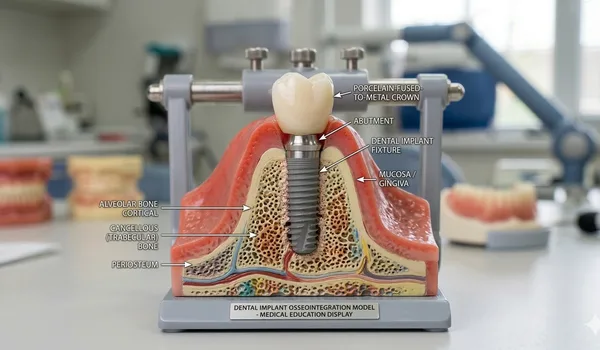
A dental implant has 3 components:
- Implant post (fixture): A titanium screw surgically placed into the jawbone. This is the "root" that integrates with your bone.
- Abutment: A connector piece that attaches to the top of the implant post and holds the crown.
- Crown (prosthesis): The visible "tooth" — usually porcelain or zirconia, custom-made to match your other teeth.
The key innovation: osseointegration. Titanium is biocompatible — your bone cells literally grow into the microscopic surface texture of the implant, creating a bond as strong as (or stronger than) a natural tooth root. This takes 3–6 months but creates a permanent foundation.
Types of Implants
| Type | Cost | Best For | Timeline |
|---|---|---|---|
| Single implant | $3,000–$6,000 | Replacing 1 tooth | 4–9 months |
| Implant bridge | $6,000–$15,000 | Replacing 2–4 adjacent teeth | 4–9 months |
| All-on-4 | $15,000–$30,000 per arch | Full arch replacement | Same-day temp, 6 months final |
| All-on-6 | $20,000–$40,000 per arch | Full arch, more support | Same-day temp, 6 months final |
| Mini implants | $500–$1,500 each | Denture stabilization | Single appointment |
| Zygomatic implants | $12,000–$25,000 | Severe upper jaw bone loss | Specialized |
Single implant
One implant replaces one tooth. The most common type. After extraction, the implant is placed (sometimes immediately, sometimes after healing), bone integrates for 3–6 months, then a permanent crown is placed. Total cost including all components: $3,000–$6,000.
All-on-4 / All-on-6
The revolutionary approach to full-arch tooth replacement. Instead of individual implants for each missing tooth, 4 or 6 strategically placed implants support a complete set of fixed teeth for the entire arch. You can walk out of surgery with a full set of temporary teeth the same day. The permanent prosthesis is placed 3–6 months later. Detailed pricing in our Texas implant cost guide.
Costs Breakdown
| Component | Cost Range |
|---|---|
| Implant post (surgery) | $1,500–$3,000 |
| Abutment | $300–$500 |
| Crown | $1,000–$2,500 |
| Bone graft (if needed) | $250–$3,000 |
| Sinus lift (if needed) | $1,500–$5,000 |
| CT scan / 3D imaging | $150–$400 |
| Tooth extraction (if needed) | $75–$450 |
State-level pricing varies significantly. See our detailed breakdown: How Much Are Dental Implants in Texas? →
Insurance and financing
Medical dental insurance increasingly covers implants, but typically at 50% with limitations. Annual maximums ($1,000–$2,000) rarely cover the full cost. Many implant centers offer financing: CareCredit, Proceed Finance, and in-house payment plans with 0% interest options. HSA/FSA accounts are excellent for implant costs.
The Implant Process
Phase 1: Evaluation and planning
3D CT scan, dental exam, medical history review. The surgeon evaluates bone density, bone volume, sinus position (upper jaw), nerve position (lower jaw), and overall health. Treatment plan is created with precise implant positioning.
Phase 2: Preparatory procedures (if needed)
Extractions, bone grafting, or sinus lifts may be needed before implant placement. Bone grafts typically need 3–6 months to mature before the implant can be placed.
Phase 3: Implant placement surgery
The implant post is surgically placed into the jawbone. Under local anesthesia (or sedation), the surgeon creates a precise channel in the bone and threads the implant into position. The gum is sutured over (or around) the implant. Surgery takes 1–2 hours for a single implant.
Phase 4: Osseointegration (3–6 months)
The healing period where bone grows around and bonds to the titanium surface. This is the critical phase — you'll wear a temporary tooth or flipper during this time. No heavy chewing on the implant site.
Phase 5: Abutment and crown
Once integration is confirmed (often by torque testing), the abutment is placed, impressions are taken, and your permanent crown is fabricated and installed. This final step takes 2–3 weeks from impression to final placement.
Recovery Timeline
| Time | What to Expect |
|---|---|
| Day 1–3 | Swelling, mild bleeding, jaw stiffness. Soft foods only. Pain managed with prescribed medication. |
| Week 1 | Swelling peaks then decreases. Stitches begin dissolving. Transition to semi-soft foods. |
| Week 2–4 | Significant improvement. Most normal activities resume. Follow-up appointment. |
| Month 2–6 | Osseointegration occurring (no visible progress). Avoid heavy chewing on the site. |
| Month 4–9 | Crown placement. Full function restored. |
Who Qualifies for Implants?
Good candidates
- Adequate jawbone density (or willingness to undergo bone grafting)
- Healthy gums free of periodontal disease
- Non-smokers (or willing to quit)
- No uncontrolled chronic conditions (diabetes, autoimmune diseases)
- Adults whose jaw growth is complete
May not qualify
- Heavy smokers (2x higher failure rate)
- Uncontrolled diabetes (impairs healing)
- Patients on high-dose bisphosphonates (bone medications) — risk of jawbone necrosis
- Severe bone loss without willingness to graft
- Active gum disease (must be treated first)
Implant Care and Maintenance
Implants don't get cavities, but they can develop peri-implantitis — infection around the implant that destroys supporting bone. This is the leading cause of implant failure after successful integration. Prevention is identical to gum disease prevention:
- Brush twice daily with a soft brush
- Use a water flosser or interdental brushes around the implant
- Professional cleanings every 3–6 months
- Don't smoke
For full-arch prosthetics, specialized cleaning is essential: How to Clean All-on-4 Dental Implants →
Implants vs Bridges vs Dentures
| Feature | Implant | Bridge | Denture |
|---|---|---|---|
| Cost (single tooth) | $3,000–$6,000 | $2,000–$5,000 | $1,000–$3,000 (partial) |
| Lifespan | 25+ years (lifetime) | 10–15 years | 5–10 years |
| Adjacent teeth affected? | No | Yes (filed down for crowns) | May affect with clasps |
| Bone preservation | Preserves bone | Bone loss under bridge | Accelerates bone loss |
| Feels natural? | Yes | Mostly | No |
| Removable? | No (fixed) | No (fixed) | Yes |
Risks and Complications
- Implant failure (2–5%): Usually during osseointegration. May require removal, healing, and re-placement.
- Infection: Rare with proper antibiotics and hygiene.
- Nerve damage: Lower jaw implants near the inferior alveolar nerve — a skilled surgeon uses 3D imaging to avoid this.
- Sinus perforation: Upper jaw implants may enter the sinus cavity if not properly planned.
- Peri-implantitis: Gum disease around implants. The long-term threat. Prevention through meticulous hygiene.
Frequently Asked Questions
How much do dental implants cost?
A single dental implant costs $3,000–$6,000 total, including the implant post ($1,500–$3,000), abutment ($300–$500), and crown ($1,000–$2,500). Full-arch All-on-4 implants cost $15,000–$30,000 per arch. Costs vary significantly by location, surgeon, and material choices.
How long do dental implants last?
Dental implants can last 25+ years and often a lifetime with proper care. The titanium implant post itself may never need replacement. The crown on top typically lasts 10–15 years before it may need replacement due to normal wear.
Are dental implants painful?
The implant surgery is performed under local anesthesia or sedation and is not painful during the procedure. Post-surgery, expect mild to moderate discomfort for 3–5 days, similar to a tooth extraction. Most patients say the recovery was easier than expected, managed with over-the-counter pain medication.
Who is not a good candidate for dental implants?
Poor candidates include heavy smokers (2x higher failure rate), people with uncontrolled diabetes, patients on high-dose bisphosphonates, those with severe bone loss unwilling to undergo grafting, and patients with active gum disease. Most medical conditions can be managed to allow implant placement.
Explore Our Dental Implant Articles
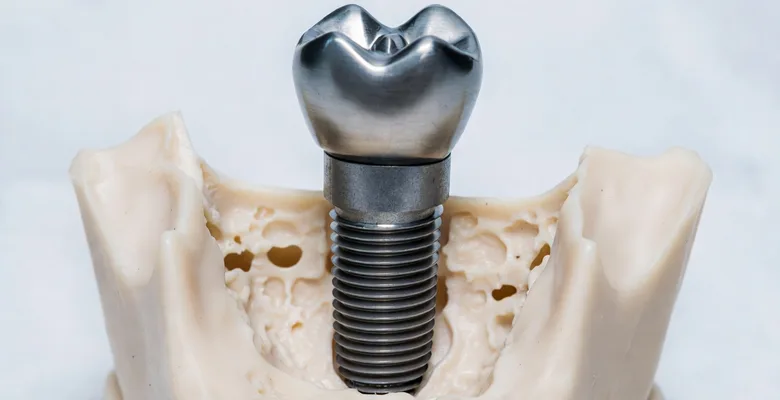
How Much Are Dental Implants in Texas?
City-by-city pricing, insurance, and ways to save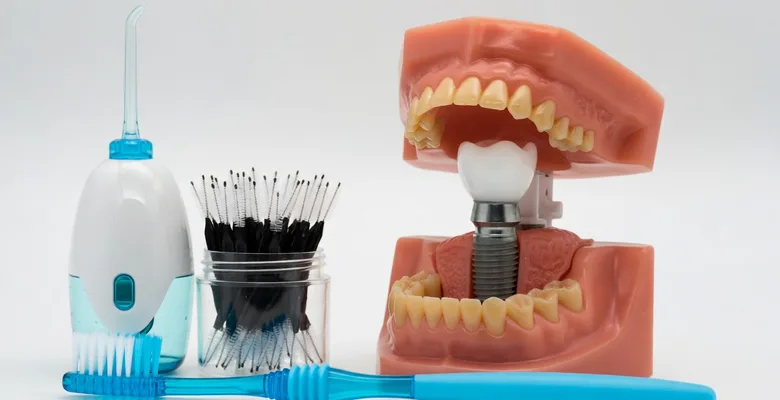
How to Clean All-on-4 Dental Implants
Daily routine, essential tools, and professional maintenanceRelated topics
- Crowns Guide — The visible part of your implant
- Tooth Extraction Guide — Often the step before implants
- Gum Health Guide — Critical for implant success
- Veneers Guide — Cosmetic alternative for damaged front teeth
- General Dental Guide — Routine care around implants