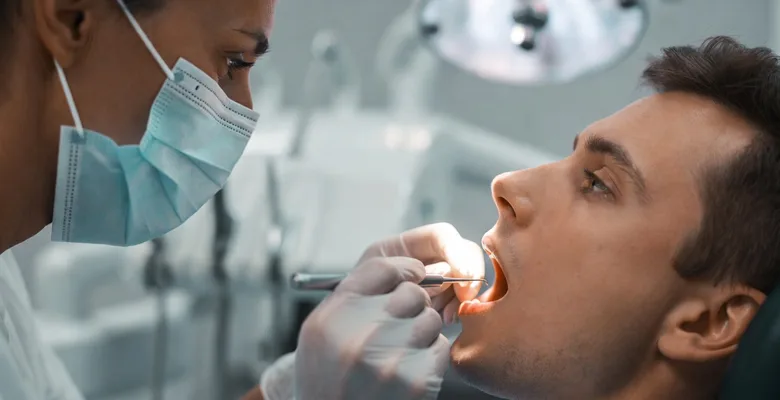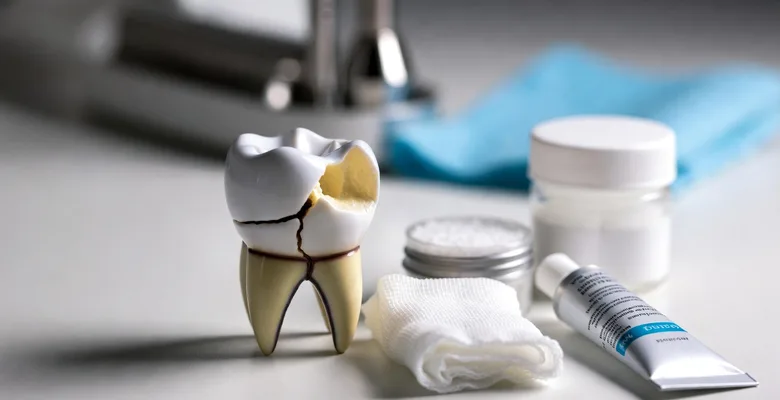
If you're searching for this at 2 AM with a throbbing, broken tooth, I want to start with the most helpful thing first: how to manage the pain tonight. Then I'll explain why pulling it yourself is a genuinely bad idea, and what affordable options exist to get it handled properly.
Why You Shouldn't Pull a Broken Tooth Yourself
A tooth isn't like a splinter. It's not just sitting in your gum waiting to be plucked out. Here's what's actually holding it in place:
- Roots embedded in bone: Every tooth has 1 to 3 roots that extend deep into your jawbone. These roots are anchored by the periodontal ligament — thousands of tiny fibers connecting the root to the bone. Even a broken tooth usually has intact roots.
- The crown is broken, the roots aren't: When a tooth breaks, the visible part (crown) cracks or chips. But the roots below the gumline are still firmly cemented in bone. You'd essentially have to grip a broken stump and pull roots out of solid bone. Without proper tools and anesthesia, this is brutal.
- You can't see what you're doing: Dentists use X-rays before extraction to see the root shape, check for curved roots, and identify the position of nerves and sinuses. Going in blind is asking for complications.
What Can Go Wrong (Real Risks)
These aren't scare tactics — these are things that actually happen to people who try to pull their own teeth:
Broken roots left behind
When you yank on a broken tooth, the remaining crown might snap off — leaving the roots stuck in the bone. Now you have an open wound, exposed root fragments, and a much harder problem for the dentist to fix. Surgical root-tip removal is more complex and expensive than a simple extraction.
Severe infection
Your mouth is full of bacteria. Creating an open wound in non-sterile conditions is an invitation for infection. A dental abscess can spread to your jaw (osteomyelitis), your throat (Ludwig's angina — which can block your airway), or your bloodstream (sepsis). These are life-threatening emergencies.
Uncontrollable bleeding
A tooth socket is surrounded by blood vessels. Professional extractions use techniques to control bleeding. At home, without the right gauze, pressure, and hemostatic agents, bleeding can be heavy and difficult to stop — especially if you're on blood thinners.
Jaw fracture
Applying extreme force to an impacted or deeply rooted tooth can fracture the jawbone. This turns a $200 extraction into a $10,000+ surgical repair.
Nerve damage
The inferior alveolar nerve runs through the lower jaw directly below the roots of your back teeth. Damage to this nerve causes permanent numbness or tingling in your lip, chin, and tongue on that side.
What to Do Right Now for Pain Relief
Until you can see a dentist, here's how to manage the pain:
- Take 600mg ibuprofen (Advil) — the anti-inflammatory effect targets dental pain better than anything else OTC. Take with food.
- Alternate with 500mg acetaminophen (Tylenol) — take it 3 hours after the ibuprofen, then alternate every 3 hours. This is what dentists recommend for post-extraction pain.
- Salt water rinse — 1/2 teaspoon salt in warm water, swish gently for 30 seconds. Reduces bacteria and inflammation.
- Clove oil — dab on a cotton ball and hold against the broken tooth. Contains eugenol, a natural anesthetic used in dentistry.
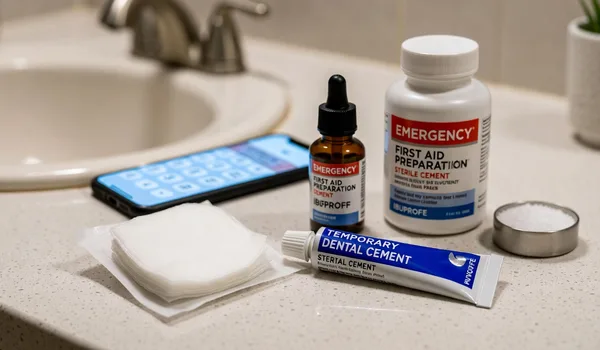
- Cover sharp edges — if the broken tooth has a sharp edge cutting your tongue or cheek, you can temporarily cover it with dental wax, sugar-free chewing gum, or even a small piece of paraffin wax from the pharmacy.
- Cold compress — ice pack wrapped in a towel on the outside of your cheek, 15 min on, 15 min off.
For more nighttime pain management, see our guide on how to sleep with a toothache.
The One Exception: Loose Fragments
There IS one situation where removing something at home is okay:
If a small piece of the tooth crown has broken off and is literally hanging by a thread of gum tissue — not connected to the root at all — you can gently remove the fragment with clean fingers or tweezers. This is like removing a loose baby tooth; the fragment has already detached from the root structure.
Signs it's safe to remove:
- The piece moves freely when you touch it with your tongue
- It's only attached by a thin piece of gum tissue
- It's clearly a chip or fragment, not the whole tooth
- There's minimal bleeding when it moves
Signs it's NOT safe — leave it alone:
- The tooth requires any force to move
- You can see root structure (the yellowish part below the white enamel)
- There's significant bleeding
- The area is swollen or infected
- You feel pain when trying to move it
Even after removing a loose fragment, you still need to see a dentist. The remaining tooth structure may need a crown, extraction, or other treatment.
Affordable Ways to Get a Tooth Pulled
I understand that for many people, cost is the reason they're considering doing this at home. Here are real options:
| Option | Cost | Details |
|---|---|---|
| Dental schools | $50–$150 | Students perform the extraction supervised by licensed faculty. Quality care at 50–70% less. Takes longer but is safe. |
| Community health centers | Sliding scale | Federally qualified health centers (FQHCs) charge based on income. Find one at findahealthcenter.hrsa.gov |
| Free dental clinics | Free | Many cities have free clinics or dental events. Search "free dental clinic near me" or call 211. |
| Dental discount plans | $8–$15/month | Not insurance — a membership that gives 20–50% discounts at participating dentists. |
| Emergency Medicaid | Free or low-cost | In many states, Medicaid covers emergency dental extractions even for adults. |
| Payment plans | $200–$400 total | Many dentists offer CareCredit or in-house financing. 0% interest promotions available. |
Bottom line: A simple extraction at even a regular dentist costs $75 to $300. That's less than a single ER visit, and vastly less than treating the complications of a botched self-extraction.
What a Professional Extraction Is Actually Like
If fear of the dentist is part of why you're considering the DIY route, let me describe what actually happens:
- Numbing (2–3 min) — Local anesthesia completely numbs the area. You feel a brief pinch from the injection, then nothing. If you're very anxious, many offices offer nitrous oxide ("laughing gas") or even IV sedation.
- Loosening (1–3 min) — The dentist uses a small instrument called an elevator to gently rock the tooth and loosen the ligaments holding it in place.
- Extraction (30 sec – 2 min) — Forceps grip the tooth and it's removed with controlled pressure. You feel pressure but zero pain.
- Socket care (2 min) — The socket is checked, cleaned, and you bite down on gauze to control bleeding.
Total time in the chair: 15 to 30 minutes. Most people are surprised by how quick and painless it is. The anticipation is almost always worse than the reality.
What Happens If You Just Leave It
Some people think "I'll just leave it and deal with the pain." Here's the progression you can expect:
- Week 1–2: Sharp edges irritate your tongue and cheeks. Food gets trapped in the break. Pain comes and goes.
- Week 2–4: Bacteria enter through the break and reach the inner tooth (pulp). Constant pain begins. Sensitivity to hot and cold intensifies.
- Month 1–3: The nerve dies. Infection forms around the root tip (abscess). Swelling, throbbing pain, bad taste in your mouth, possible fever.
- Month 3+: The infection can spread to surrounding bone, adjacent teeth, and soft tissue. Chronic infection. Risk of cellulitis, Ludwig's angina, or sepsis in severe cases.
A broken tooth never heals on its own. It only gets worse. The longer you wait, the more complex and expensive the treatment becomes.
Frequently Asked Questions
Need help with other tooth extraction questions?
Read Our Complete Tooth Extraction Guide →