When your dentist or periodontist says "you need a gum graft," the first thing that crosses your mind is probably the price tag. And rightfully so — this isn't a cheap procedure. But let me give you the full picture before the sticker shock kicks in, because the cost can vary wildly depending on a few key factors.
Gum Graft Costs by Type (2026)
| Graft Type | Cost Per Tooth | Multiple Teeth (3-4) | How It Works |
|---|---|---|---|
| Connective tissue graft | $700–$1,500 | $1,800–$3,500 | Tissue taken from under roof of mouth |
| Free gingival graft | $600–$1,200 | $1,500–$3,000 | Surface tissue taken from roof of mouth |
| Pedicle (lateral) graft | $700–$1,300 | Rarely done on multiple | Gum tissue rotated from adjacent area |
| AlloDerm (donor tissue) | $1,000–$2,500 | $2,500–$5,000 | Processed human donor tissue, no palate surgery |
| Pinhole Surgical Technique | $1,500–$3,000 | $3,000–$6,000 | Minimally invasive, no cutting or stitches |
The connective tissue graft is by far the most common and has the best long-term success rate. It's the "gold standard" that most periodontists will recommend as a first option. The AlloDerm and Pinhole options cost more but skip the step of cutting tissue from the roof of your mouth, which means less pain during recovery.
What Affects Your Price
Number of teeth
This is the biggest variable. Grafting one tooth might cost $800, but grafting four teeth in a single surgery might cost $2,400 instead of $3,200 — because the surgeon only needs one donor site and one session of prep work. Always ask about the per-tooth price for multiple teeth.
Severity of recession
Mild recession (1-2mm) is a quicker, simpler graft. Severe recession (4mm+) where the tooth root is significantly exposed requires more tissue, more skill, and sometimes bone grafting underneath. More complexity = higher cost.
Who does the surgery
A periodontist (gum specialist) typically charges $200 to $500 more than a general dentist for the same procedure. But here's the thing — periodontists do these surgeries all day, every day. For something this specialized, I'd personally lean toward the specialist. A failed graft means paying twice.
Where you live
Major cities like New York, San Francisco, and Los Angeles tend to run 20 to 40% higher than mid-size cities and rural areas. If you're in a high-cost area, it may be worth getting quotes from periodontists in nearby suburbs.
Tissue source
Using your own tissue (autograft from the palate) is cheaper than using donor tissue (AlloDerm, which is processed cadaver tissue) or collagen membranes. The trade-off is that using your own tissue means you have a second surgical site on the roof of your mouth that needs to heal.
Insurance Coverage & Payment Options
Dental insurance
Good news here: most dental insurance plans classify gum grafts as a medically necessary periodontal procedure, not a cosmetic one. That means coverage is usually available. Typical insurance scenarios:
- PPO plans: Usually cover 50% to 80% of the cost after your deductible
- HMO plans: May cover the procedure but only with an in-network periodontist
- Annual maximum: Most plans cap at $1,000 to $2,000/year, so a $2,500 graft still leaves you paying a big chunk
- Waiting period: Some plans make you wait 6 to 12 months before periodontal surgery is covered
Pro tip: if you need multiple teeth grafted, consider splitting the treatment across two calendar years to maximize your insurance benefits. Get 2 teeth done in December and 2 more in January, and you'll use two annual maximums instead of one.
Medical insurance
Here's a lesser-known option: some medical insurance plans (not dental insurance) cover gum grafts if the recession is "medically necessary" — for example, if it's causing chronic pain, infection risk, or is related to a medical condition. It's worth a phone call to your medical insurance company to ask.
Payment plans
Most periodontists offer financing through CareCredit or in-house payment plans. CareCredit offers 0% interest promotional periods (typically 6 to 24 months), but be careful — if you don't pay off the balance before the promo ends, you'll owe retroactive interest at 25%+ APR.
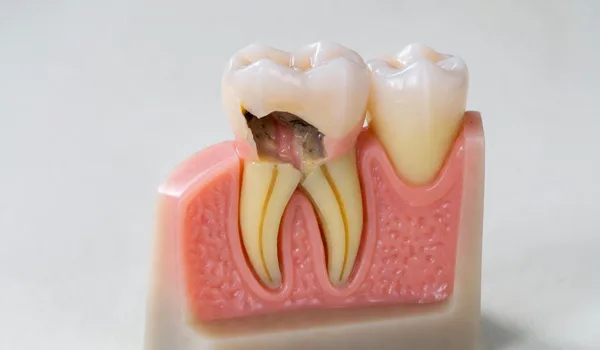
The 3 Types of Gum Grafts Explained
1. Connective tissue graft (most common)
Your periodontist cuts a small flap on the roof of your mouth, removes a piece of connective tissue from underneath, then stitches it over the exposed root. The flap on the palate is closed back up. This gives the best cosmetic results because the transplanted tissue is a good color match and blends naturally with your existing gum tissue.
2. Free gingival graft
Instead of taking tissue from under a flap, a thin strip of tissue is removed directly from the surface of the palate. This technique is used when you need more tissue thickness rather than root coverage. It's common for people with naturally thin gum tissue who need thickening to prevent future recession. The results can look slightly different in color from the surrounding gums, which is why it's used more often on lower teeth where aesthetics matter less.
3. Pedicle graft
If you have plenty of gum tissue near the receded area, the periodontist can create a flap of tissue from the adjacent gum and swing it over to cover the exposed root. The advantage is that blood supply is maintained since the tissue is never fully detached. The downside is that you need enough healthy gum tissue nearby for it to work.
What the Procedure Is Actually Like
I know "gum surgery" sounds terrifying, so let me demystify it:
- You're numbed up completely (5 min) — Local anesthesia at the graft site and the donor site. You feel zero pain during the procedure. Some periodontists also offer IV sedation if you're really anxious, though this adds $300 to $600 to the cost.
- The donor tissue is harvested (10–15 min) — A small piece of tissue is taken from the palate. The wound is about the size of a postage stamp.
- The recipient site is prepared (5–10 min) — The gum around the receded area is gently loosened to create a pocket for the new tissue.
- The graft is placed and stitched (10–15 min) — The harvested tissue is positioned over the exposed root and secured with tiny sutures.
- A protective dressing is placed (2 min) — A periodontal bandage (it looks like pink putty) covers the graft site to protect it during the first week.
Total chair time: 45 to 90 minutes depending on how many teeth are being treated. You'll be in and out of the office in about 90 minutes total.
Recovery: What to Expect Week by Week
| Timeline | What to Expect | What to Do |
|---|---|---|
| Day 1–3 | Swelling, moderate discomfort, some bleeding | Soft/cold foods only, ice packs, prescribed pain meds |
| Day 4–7 | Swelling decreasing, palate soreness is worst | Soft foods, gentle salt rinses, avoid brushing graft site |
| Week 2 | Stitches dissolve or are removed, much less pain | Graduate to normal foods, very gentle brushing |
| Week 3–4 | Graft is healing, color starts to match | Resume normal oral hygiene, avoid vigorous brushing on graft |
| Month 2–3 | Full maturation, tissue blends in | Normal activity, graft is fully integrated |
The honest truth about recovery: the graft site (where the new tissue was placed) is usually pretty manageable. The roof of your mouth — where the tissue was harvested from — is what bothers most patients. It feels like a bad pizza burn for the first week. Eating is annoying rather than painful. Most people take 2 to 3 days off work, though some go back the next day.
Cheaper Alternatives to Gum Grafts
Not everyone with recession needs surgery. Here are some alternatives your periodontist might suggest:
- Bonding / tooth-colored composite: If the recession is mild and cosmetic is the main concern, your dentist can cover the exposed root with composite resin ($150–$300 per tooth). It doesn't address the underlying gum problem, but it protects the root and looks better.
- Desensitizing treatments: If sensitivity is your main complaint, prescription fluoride varnish or desensitizing agents can help without surgery.
- Orthodontics: Sometimes recession is caused by teeth being pushed too far forward in the bone. Braces or Invisalign can move the teeth back to a healthier position, which can slow or stop recession.
- Watchful waiting: Mild recession (1–2mm) that isn't progressing may not need treatment at all. Regular monitoring at your dental visits is enough.
Is It Worth the Money?
I'll be blunt: if your periodontist is recommending a gum graft, it's usually because the recession is significant enough that your tooth is at risk. Here's the cost comparison that puts it in perspective:
| Scenario | Cost |
|---|---|
| Gum graft now | $800–$1,500 |
| Root canal later (from root decay) | $800–$1,500 |
| Crown after root canal | $800–$1,500 |
| Dental implant if tooth is lost | $3,000–$5,000 |
A $1,000 gum graft today saves a tooth that could cost you $5,000+ to replace down the road. And that's not even counting the months of appointments, healing, and hassle that come with losing a tooth and getting an implant.
Frequently Asked Questions
Want to learn more about gum health?
Read Our Complete Gum Health Guide →