- What Is a Cavity?
- The 5 Stages of Tooth Decay
- Filling Types Compared
- How Much Do Fillings Cost?
- What Happens During a Filling
- Can You Heal a Cavity Without a Filling?
- Pain and Sensitivity After Fillings
- How Long Do Fillings Last?
- Cavity Prevention: The Evidence-Based Approach
- When a Filling Becomes a Root Canal
- Related Articles
- FAQ
Here's a number that might surprise you: 90% of adults have had at least one cavity. Cavities aren't a sign of personal failure — they're the result of bacteria, diet, genetics, and time. Some people brush perfectly and still get them. Others barely floss and never do. Life isn't fair.
But understanding how decay works and what your filling options are puts you in control. This guide gives you everything.
What Is a Cavity?
A cavity (dental caries) is a hole in your tooth caused by bacterial acid. Here's the simple version of the process:
- You eat or drink something containing sugar or starch
- Bacteria in plaque on your teeth feed on these sugars
- As they metabolize sugar, bacteria produce acid
- This acid dissolves the mineral structure of your tooth enamel
- Over time, the dissolving creates a hole — a cavity
It doesn't happen overnight. Cavities develop over weeks to months — which is exactly why regular dental checkups catch them early. A small cavity caught on X-ray takes 20 minutes and $150 to fill. The same cavity ignored for a year might need a root canal ($1,000+) and a crown ($800+).
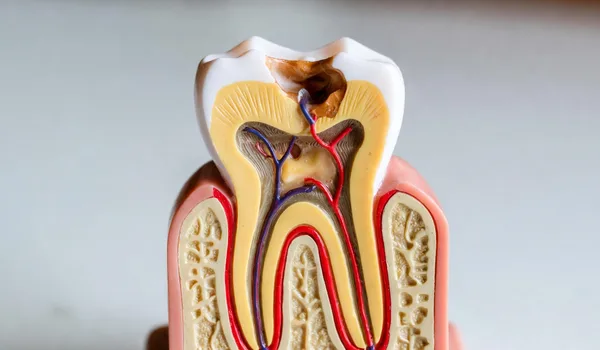
The 5 Stages of Tooth Decay
| Stage | What's Happening | Treatment | Reversible? |
|---|---|---|---|
| 1. White spot | Enamel surface losing minerals | Fluoride, remineralization | ✅ Yes |
| 2. Enamel decay | Acid breaks through enamel | Small filling | ❌ No |
| 3. Dentin decay | Decay reaches softer dentin layer | Filling (may be larger) | ❌ No |
| 4. Pulp involvement | Bacteria reach the nerve | Root canal + crown | ❌ No |
| 5. Abscess | Infection at the root tip | Root canal or extraction | ❌ No |
Key insight: Only Stage 1 is reversible. Once the enamel is physically broken through (Stage 2+), no amount of fluoride, oil pulling, or special toothpaste will fix it — you need a filling. Read more about this in our article on healing cavities without fillings.
Filling Types Compared
| Type | Material | Cost | Lifespan | Appearance |
|---|---|---|---|---|
| Composite (white) | Resin + glass particles | $150–$400 | 5–10 years | Matches tooth color |
| Amalgam (silver) | Mercury + silver + tin + copper | $75–$200 | 10–15+ years | Silver/dark |
| Gold | Gold alloy | $250–$4,500 | 20–30+ years | Gold-colored |
| Ceramic (inlay/onlay) | Porcelain | $250–$4,500 | 15–20 years | Matches tooth color |
| Glass ionomer | Glass + acrylic | $150–$300 | 5 years | Translucent |
Which filling type is best?
Composite is the most popular choice today for both front and back teeth. It's tooth-colored, bonds directly to the tooth (supporting the structure), and works for most cavity sizes. The main limitation: it's not as durable as amalgam for very large fillings on back teeth that take heavy biting force.
Amalgam is slowly declining in use but still chosen for large posterior fillings where durability matters more than aesthetics. Despite persistent concerns, the FDA and ADA confirm that amalgam fillings are safe for adults and children ages 6+.
Gold and ceramic are premium options for longevity. Gold is the longest-lasting filling material in dentistry — some last 40+ years. Ceramic inlays/onlays are fabricated in a lab and cemented in place, providing excellent aesthetics and durability for large restorations.
How Much Do Fillings Cost?
| Filling Size | Without Insurance | With Insurance |
|---|---|---|
| Small (1 surface) | $100–$200 | $20–$80 |
| Medium (2 surfaces) | $150–$300 | $30–$120 |
| Large (3+ surfaces) | $200–$400 | $50–$160 |
| Inlay or onlay | $250–$4,500 | $100–$1,800 |
Insurance typically covers fillings at 50–80% after deductible, classified as a "basic" or "restorative" procedure. Most plans cover composite fillings; some still calculate coverage at the cheaper amalgam rate and you pay the difference. The same filling in Texas might cost 20% less than in New York due to regional price differences.
What Happens During a Filling
We have a detailed walkthrough in our how long does a filling take article, but here's the summary:
- Numbing (5 min): Local anesthesia injection. Brief pinch, then complete numbness in 2–3 minutes. Some tiny cavities can be filled without numbing.
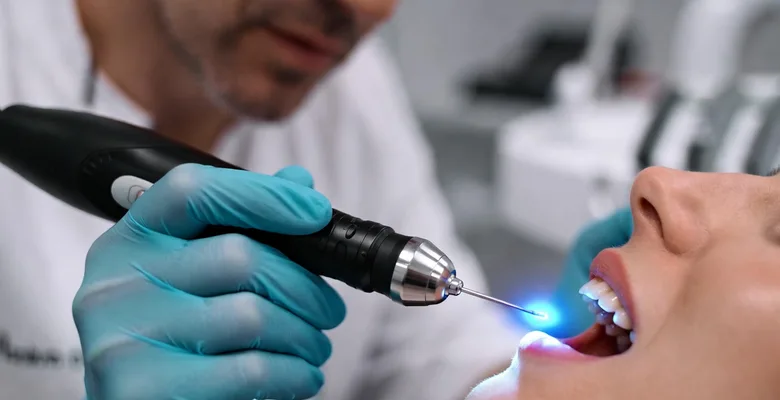
- Decay removal (5–10 min): Dentist uses a drill or laser to remove the decayed tooth material. You'll feel vibration and pressure but no pain.
- Tooth preparation (2–5 min): The cavity is cleaned, shaped, and (for composite fillings) etched with acid gel to help the filling bond.
- Filling placement (5–10 min): The filling material is placed in layers. For composite, each layer is cured with a blue UV light for 20–40 seconds.
- Shaping and polishing (5 min): The filling is trimmed to match your bite and polished smooth.
Total time: 20 to 40 minutes for a single filling. Multiple fillings can be done in one visit, typically up to 4 fillings per session.
Can You Heal a Cavity Without a Filling?
Only at Stage 1 (white spot, no physical breakdown of enamel). At this very early stage, the process can potentially be reversed through:
- Fluoride toothpaste (1,000+ ppm fluoride)
- Prescription-strength fluoride rinse or varnish
- Reducing sugar frequency (not amount — frequency is what matters)
- Improved oral hygiene
- Xylitol products (gum, mints) — xylitol inhibits bacterial acid production
Once a cavity has broken through the enamel surface, it cannot be reversed. No home remedy — not oil pulling, not activated charcoal, not special supplements — will regrow enamel. The cavity will continue growing until it's filled by a dentist. We debunk common myths and explain what actually works in our complete guide: How to Heal a Cavity Without Fillings →
Pain and Sensitivity After Fillings
| Symptom | Normal? | Duration |
|---|---|---|
| Sensitivity to hot/cold | ✅ Yes | 1–3 weeks |
| Soreness around injection site | ✅ Yes | 1–3 days |
| Mild aching when biting | ✅ Yes | 1–2 weeks |
| High bite (feeling like filling is too tall) | ⚠️ Needs adjustment | Call dentist |
| Sharp, spontaneous pain | ❌ Not normal | Call dentist |
| Throbbing pain, swelling | ❌ Not normal | Call dentist ASAP |
Mild sensitivity after a filling is normal and resolves within a few weeks. If you're experiencing difficulty sleeping due to dental pain, check our guide on sleeping with toothache. If sharp or throbbing pain develops, the cavity may have been deeper than expected — the nerve might be inflamed and you may need a root canal.
How Long Do Fillings Last?
| Filling Type | Average Lifespan | Max Lifespan (with good care) |
|---|---|---|
| Composite (white) | 5–10 years | 12–15 years |
| Amalgam (silver) | 10–15 years | 20+ years |
| Gold | 20–30 years | 40+ years |
| Ceramic | 15–20 years | 25+ years |
| Glass ionomer | 3–5 years | 7 years |
When a filling fails, it usually needs to be replaced with a larger filling. After several replacement cycles, the tooth may not have enough structure left to support another filling — at that point, a crown is needed. This is why preventing cavities early is so important.
Cavity Prevention: The Evidence-Based Approach
No gimmicks, just what the research shows actually works:
The big 4
- Fluoride toothpaste, twice daily: Fluoride strengthens enamel and reverses early white spots. Don't rinse after brushing — let the fluoride sit on your teeth.
- Floss once daily: Cavities between teeth (interproximal decay) are the most common type. Your toothbrush can't reach here. Floss, water flosser, or interdental brushes — pick one and use it daily.
- Limit sugar frequency: It's not how MUCH sugar you eat — it's how OFTEN. Sipping a soda for 3 hours is worse than drinking it in 5 minutes. Each exposure gives bacteria 20–30 minutes of acid production.
- Regular dental visits: Checkups every 6 months catch early decay. A checkup takes 30–60 minutes and can save you thousands in avoided procedures.
Extra protection
- Dental sealants: $30–$60 per tooth. Plastic coating on molar chewing surfaces that prevents decay by 80%.
- Xylitol: Sugar substitute that bacteria can't metabolize. Chewing xylitol gum after meals reduces cavity risk.
- Prescription fluoride: For high-risk patients, dentists can prescribe 5000 ppm fluoride toothpaste (vs. 1000–1500 ppm in store brands).
- Dry mouth management: Saliva is your mouth's natural defense. Medications that cause dry mouth dramatically increase cavity risk. Stay hydrated, use xylitol products, and consider saliva substitutes.
When a Filling Becomes a Root Canal
This is the scenario everyone dreads: you go in for what you think is a filling, and the dentist says you need a root canal. Here's when and why this happens:
- Decay is deeper than it looked on X-ray. X-rays show a 2D picture of a 3D tooth. Sometimes decay extends further than expected.
- The cavity was already close to the nerve. Removing the decay exposes or comes very close to the pulp. The tooth may or may not recover from this — your dentist may try a filling first and monitor for symptoms.
- Symptoms indicate nerve damage: Lingering sensitivity (30+ seconds after hot/cold), spontaneous pain, waking up at night with toothache, or swelling around the tooth all suggest the nerve is compromised.
If you need a root canal, don't panic — it's one of the most routine procedures in dentistry. Read our root canal preparation guide and learn about prevention strategies.
Frequently Asked Questions
How long does a dental filling take?
A single filling typically takes 20–40 minutes from start to finish. This includes numbing (5 min), decay removal (5–10 min), filling placement (5–10 min), and shaping/polishing (5 min). Multiple fillings in the same area can be done in one appointment of 60–90 minutes.
Can a cavity heal on its own without a filling?
Very early-stage cavities (enamel demineralization only) can potentially remineralize with fluoride treatments, improved hygiene, and dietary changes. However, once a cavity has broken through the enamel into the dentin, it cannot heal on its own and requires a filling to prevent further decay.
How long do dental fillings last?
Composite (tooth-colored) fillings last 5–10 years on average. Amalgam (silver) fillings last 10–15 years. Gold fillings can last 20+ years. Lifespan depends on filling size, location, oral hygiene, and grinding habits.
Do fillings hurt?
The filling procedure itself is painless because the area is completely numbed with local anesthetic. You may feel pressure but not pain. After the numbness wears off, mild sensitivity to hot and cold is normal for 1–2 weeks.
Explore Our Fillings Articles
How Long Does a Filling Take?
Procedure walkthrough, timing by filling type, and what to expect
How to Heal a Cavity Without Fillings
What actually works, what doesn't, and when you can reverse early decayRelated topics
- Root Canal Guide — When fillings aren't enough
- Dental Crowns Guide — When fillings are too large for the tooth
- Tooth Pain Guide — Managing pain from cavities and fillings
- General Dental Guide — Checkups, bonding, and more
- Gum Health Guide — Gum disease and cavity risk
- Teeth Whitening Guide — Whitening after getting fillings