Three words nobody wants to hear from their dentist: "You need a root canal." The phrase has become shorthand for dental horror. But here's the reality most people don't know: modern root canals are no more uncomfortable than getting a filling. The procedure that still carries a terrifying reputation from the 1980s has been completely transformed by better anesthesia, rotary instruments, and advanced techniques.
If you've been told you need a root canal — or you're worried you might — this guide will calm your nerves and give you the real facts.
What Is a Root Canal?
A root canal (endodontic treatment) removes infected or damaged nerve tissue (pulp) from inside a tooth. Here's the anatomy:
- Enamel: Hard outer shell
- Dentin: Softer layer underneath enamel
- Pulp: Soft tissue containing nerves, blood vessels, and connective tissue — this is what gets infected
- Root canals: Channels within the root containing the pulp, extending from the pulp chamber to the root tip
When the pulp becomes infected (from deep cavities, cracks, or trauma), it can't heal on its own. The infection spreads, creating an abscess at the root tip. A root canal removes the infected pulp, cleans and disinfects the canal system, and seals it. The tooth remains in your mouth — it just no longer has a live nerve inside.
Signs You Need a Root Canal
- Lingering pain to hot/cold: Pain that lasts 30+ seconds after the stimulus is removed = nerve damage
- Spontaneous pain: Pain that wakes you up at night or comes without any trigger
- Throbbing pain: Pulsating pain that worsens when lying down
- Pain when chewing: Especially sensitivity to pressure on a specific tooth
- Swelling: Localized swelling in the gum near the affected tooth (abscess)
- Gum pimple: A small bump (fistula) on the gum that may drain pus
- Darkening tooth: A tooth that's turning gray or dark — the nerve inside has died
- Previous trauma: A tooth that was hit/injured years ago may eventually need root canal treatment
Is It Really That Painful?
The honest answer: the root canal itself is not painful. You're completely numb. Most patients say it feels like getting a filling — just a longer appointment. What IS painful is the infection that caused you to need the root canal in the first place.
After the procedure, expect mild to moderate soreness for 2–5 days, manageable with over-the-counter ibuprofen. Severe post-procedure pain is uncommon and should be reported to your dentist.
Studies consistently show that patients' anxiety before root canals far exceeds the actual discomfort experienced during and after. Full preparation details: How to Prepare for a Root Canal →
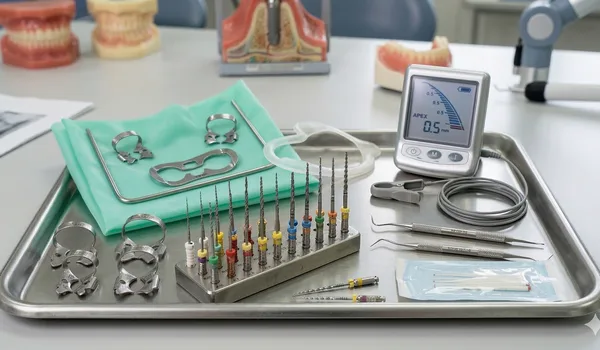
Step-by-Step Procedure
- Anesthesia (5 min): Local anesthetic ensures complete numbness. For infected teeth that are harder to numb, the endodontist uses supplemental techniques.
- Rubber dam placement (2 min): A small sheet isolates the tooth, keeping it dry and preventing bacteria from saliva entering the canals.
- Access opening (5 min): A small hole is drilled through the top (crown) of the tooth to reach the pulp chamber.
- Pulp removal and canal shaping (20–40 min): Using tiny rotary files, the infected pulp is removed and the canals are cleaned, shaped, and irrigated with disinfecting solution (sodium hypochlorite).
- Filling the canals (10 min): The cleaned canals are filled with gutta-percha (a rubber-like material) and sealed with cement.
- Temporary filling (5 min): The access hole is sealed. You'll return for a permanent crown within 2–4 weeks.
Total time: 60–90 minutes for most teeth. Front teeth are faster (1 canal). Molars take longer (3–4 canals).
Costs
| Tooth Type | Root Canal Cost | + Crown Cost | Total |
|---|---|---|---|
| Front tooth (1 canal) | $700–$1,100 | $800–$1,500 | $1,500–$2,600 |
| Premolar (1–2 canals) | $800–$1,200 | $800–$1,500 | $1,600–$2,700 |
| Molar (3–4 canals) | $1,000–$1,600 | $800–$1,500 | $1,800–$3,100 |
| Retreatment | $1,200–$2,000 | Usually needs new crown | $2,000–$3,500 |
Insurance typically covers root canals at 50–80% as a "major" procedure. An endodontist (root canal specialist) charges 15–25% more than a general dentist but has specialized training and equipment.
Recovery
| Day | What to Expect |
|---|---|
| Day 1 | Mild soreness, numbness wearing off. Take ibuprofen proactively. |
| Day 2–3 | Peak tenderness when biting. Chew on other side. Soft foods. |
| Day 4–7 | Significant improvement. Most return to normal eating. |
| Week 2+ | Should feel normal. Schedule crown appointment. |
Why You Need a Crown After
A root-canaled tooth loses its blood supply and becomes brittle over time — like a dead tree branch. Without a protective crown, it will eventually crack under normal chewing forces. Studies show that root-canaled back teeth without crowns are 6x more likely to be extracted within 5 years. A crown is not optional — it's essential. Learn about temporary crowns while your permanent one is being made.
Root Canal vs. Extraction
| Factor | Root Canal + Crown | Extraction + Implant |
|---|---|---|
| Cost | $1,500–$3,100 | $3,000–$6,000+ |
| Timeline | 2–4 weeks total | 6–12 months |
| Success rate | 95%+ for 10+ years | 95–98% for 20+ years |
| Natural tooth preserved? | Yes | No |
| Best for | Teeth with adequate structure | Unable-to-save teeth, severe fractures |
Rule of thumb: Save the natural tooth whenever possible. A root canal + crown is cheaper, faster, and preserves your natural root/bone. But if the tooth is severely fractured, has insufficient structure for a crown, or has failed a previous root canal, extraction + implant is the better long-term investment.
Prevention
The best root canal is the one you never need. Prevention strategies in our complete guide: How Do You Prevent a Root Canal? →
- Treat cavities early — before they reach the nerve
- Wear a mouth guard for sports and a night guard if you grind
- Don't ignore pain or sensitivity — early treatment prevents nerve damage
- Maintain gum health — periodontal infection can reach the nerve through the root
- Regular dental visits catch problems early
Common Root Canal Myths Debunked
- "Root canals are extremely painful" — FALSE. Modern anesthesia makes them comparable to fillings. The infection before the root canal is what hurts.
- "It's better to just pull the tooth" — FALSE. Saving a natural tooth is almost always preferable to extraction. Implants are great, but a natural tooth with a root canal is still better.
- "Root canals cause illness" — FALSE. This myth originated from debunked research from the 1920s. There is zero scientific evidence linking root canals to systemic disease.
- "The tooth is dead after root canal" — PARTIALLY TRUE. The nerve is removed, but the tooth is still nourished by surrounding tissues and remains a functional part of your mouth for decades.
Frequently Asked Questions
Is a root canal painful?
Modern root canals are not painful during the procedure — the area is completely numbed. Most patients say it feels like getting a filling, just longer. Post-procedure soreness for 2–5 days is normal and manageable with ibuprofen. The infection before the root canal is what actually hurts.
How much does a root canal cost?
Root canal costs vary by tooth: front teeth ($700–$1,100), premolars ($800–$1,200), and molars ($1,000–$1,600). Add $800–$1,500 for the crown that's needed afterward, for a total of $1,500–$3,100. Insurance typically covers 50–80% as a major procedure.
Do you always need a crown after a root canal?
A crown is strongly recommended after root canal on back teeth (premolars and molars) because the tooth becomes brittle without its blood supply. Studies show root-canaled back teeth without crowns are 6 times more likely to fracture. Front teeth may sometimes be restored with a filling instead.
How long does a root canal take?
A root canal takes 60–90 minutes for most teeth. Front teeth with one canal are faster (45–60 min), while molars with 3–4 canals take longer (75–90 min). Some complex cases require two appointments. The procedure includes anesthesia, access, cleaning, and filling the canals.
Explore Our Root Canal Articles
How to Prepare for a Root Canal
Pre-procedure checklist, what to expect, and anxiety management
How Do You Prevent a Root Canal?
9 prevention strategies and warning signs to watch forRelated topics
- Crowns Guide — Essential after root canal treatment
- Fillings Guide — Treating cavities before they need root canals
- Tooth Pain Guide — Understanding root canal-related pain
- Dental Implants Guide — When extraction is needed instead
- Tooth Extraction Guide — When the tooth can't be saved
- General Dental Guide — Preventive care