- Do You Actually Need Braces?
- 5 Types of Braces Compared
- How Much Do Braces Cost?
- Braces for Adults vs. Kids vs. Teens
- The Braces Process: Start to Finish
- Pain and Discomfort: What's Normal
- Foods to Avoid (and What You Can Eat)
- How to Care for Your Braces
- How Long Do Braces Take?
- After Braces: Retainers and Long-Term Care
- Related Articles
Braces are one of those things most people need but nobody's excited about. I get it. They're expensive, they take forever, and the idea of metal in your mouth for two years isn't exactly thrilling. But here's the truth: crooked teeth, overbites, and misalignment don't fix themselves, and they get harder to correct the longer you wait.
This guide breaks down everything — no fluff, no dental jargon, just the answers you actually need. If you want to jump straight to a specific topic, use the table of contents above.
Do You Actually Need Braces?
Not everyone with slightly crooked teeth needs braces. But there are clear signs that orthodontic treatment would genuinely improve your dental health — not just your appearance. We cover this in depth in our complete guide on signs you need braces, but here's the overview.
Signs you probably need braces
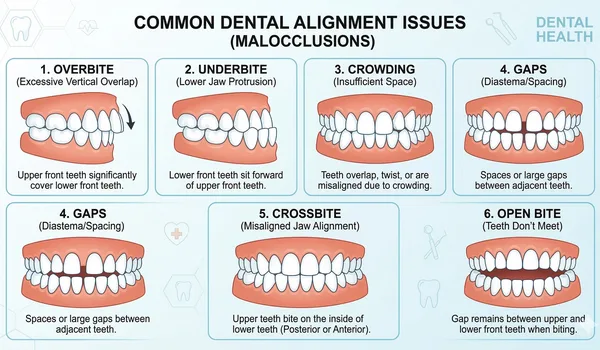
- Crowding: Teeth overlapping, rotated, or pushed behind other teeth. This makes brushing and flossing nearly impossible in some areas, leading to cavities and gum problems.
- Overbite (overjet): Upper teeth protrude too far forward. This increases the risk of trauma to the front teeth and can cause jaw problems.
- Underbite: Lower teeth sit in front of upper teeth. Affects chewing and can cause jaw pain.
- Crossbite: Some upper teeth sit inside lower teeth when biting. This causes uneven wear and can lead to chipped or broken teeth needing crowns.
- Open bite: Front teeth don't touch when back teeth are closed. Makes biting into food difficult.
- Spacing: Gaps between teeth (diastema). Often correctable with dental bonding for small gaps, or braces for larger spacing issues.
- Jaw pain or clicking: Misalignment can stress the TMJ (jaw joint), causing chronic pain and headaches.
Signs you might NOT need braces
- Mildly crooked teeth that don't affect your bite or cleaning
- A small gap between front teeth (can be fixed with bonding or veneers instead)
- Purely cosmetic concerns with a functionally healthy bite
The best way to know? Get an orthodontic consultation. Most orthodontists offer free consultations. They'll take X-rays, assess your bite, and give you honest recommendations. Read our full guide: How to Know If You Need Braces →
5 Types of Braces Compared
Braces technology has come a long way. You've got more options than ever, each with different price points, aesthetics, and treatment capabilities.
| Type | Cost | Treatment Time | Visibility | Best For |
|---|---|---|---|---|
| Metal braces | $3,000–$7,000 | 18–36 months | Very visible | Complex cases, all ages |
| Ceramic braces | $4,000–$8,000 | 18–36 months | Somewhat visible | Adults wanting less visible option |
| Lingual braces | $8,000–$13,000 | 18–36 months | Invisible (behind teeth) | Adults needing truly invisible braces |
| Clear aligners (Invisalign) | $3,000–$8,000 | 6–24 months | Nearly invisible | Mild-moderate cases |
| Self-ligating (Damon) | $3,500–$8,000 | 12–30 months | Visible (or ceramic) | Fewer adjustments needed |
Metal braces
The classic. Stainless steel brackets bonded to each tooth, connected by archwires and elastic bands. They're the most effective option for complex cases — severe crowding, significant bite issues, and cases that need precise control. They're also the cheapest. The downside? They're the most visible, and the brackets can irritate your cheeks and lips for the first few weeks.
Ceramic braces
Same mechanism as metal but with tooth-colored or clear brackets. The archwire can also be coated white. They blend in much better from a distance, though up close they're noticeable. The trade-off: ceramic brackets are slightly larger, more fragile, and the elastic ties can stain (especially with coffee, curry, and red wine). Cost is about 20–30% more than metal.
Lingual braces
Brackets go on the back of your teeth, so they're completely invisible from the front. They're custom-made using 3D printing technology — it's genuinely impressive engineering. The downside: they're the most expensive option, they irritate your tongue initially, they affect speech more than other types, and not all orthodontists offer them because they require specialized training.
Clear aligners (Invisalign and competitors)
Custom-made clear plastic trays that gradually move your teeth. You swap to a new set every 1–2 weeks. The big advantage: they're removable, so you eat normally and brush normally. The big disadvantage: they only work for mild to moderate cases, and compliance is everything — if you don't wear them 22 hours a day, they don't work. Also, they can't do rotations and significant vertical movements as effectively as fixed braces.
Self-ligating braces (Damon System)
Similar to traditional braces but use a specialized clip instead of elastic ties to hold the archwire. This means less friction, fewer adjustments, and potentially shorter treatment time. Available in both metal and clear. Some patients report less discomfort during adjustments.
How Much Do Braces Cost?
Let's talk money. Braces are a significant investment, and the prices vary wildly depending on where you live, what type you choose, and the complexity of your case.
| Braces Type | National Average | With Insurance |
|---|---|---|
| Metal braces | $3,000–$7,000 | $1,500–$4,500 |
| Ceramic braces | $4,000–$8,000 | $2,000–$5,500 |
| Lingual braces | $8,000–$13,000 | $5,000–$10,000 |
| Invisalign | $3,000–$8,000 | $1,500–$5,000 |
| Self-ligating | $3,500–$8,000 | $2,000–$5,500 |
We have a detailed state-level breakdown that covers average costs in major cities, insurance considerations, and money-saving strategies: How Much Do Braces Cost in Texas? →
What affects the price?
- Location: New York City and San Francisco are 30–50% more expensive than smaller cities
- Case complexity: Simple spacing = cheaper. Severe crowding + bite correction = more expensive
- Treatment length: Longer treatment = more adjustment appointments = higher total cost
- Orthodontist vs. general dentist: Specialists typically charge more but have more experience with complex cases
- Retainers: Usually included in the quoted price, but ask — some offices charge separately
How to save on braces
- Dental schools: 30–50% cheaper. Work is done by supervised residents.
- Payment plans: Most orthodontists offer 0% interest monthly payments over the treatment period.
- HSA/FSA accounts: Use pre-tax dollars to pay for braces — saves you 20–35% depending on your tax bracket.
- Discount dental plans: Not insurance, but discount programs that reduce orthodontic fees by 20–30%.
- Multiple quotes: Get at least 3 consultations. Orthodontists in the same city can differ by $1,000–$2,000.
Braces for Adults vs. Kids vs. Teens
Kids (ages 7–12)
The American Association of Orthodontists recommends a first orthodontic evaluation by age 7. Not because every 7-year-old needs braces, but because some problems are much easier to correct while the jaw is still growing. Early treatment (Phase 1) might involve expanders, partial braces, or space maintainers. Full braces usually wait until all permanent teeth are in (around age 12–13).
Teens (ages 12–18)
The most common age for braces. All adult teeth are in, the jaw is still somewhat malleable, and teeth move faster in younger patients. Teens are also most likely to have wisdom teeth developing, which the orthodontist will monitor during treatment. Treatment time averages 18–24 months.
Adults (18+)
Adult braces are increasingly common — about 25% of orthodontic patients are now adults. The main differences:
- Treatment takes longer: Adult bone is denser, so teeth move more slowly. Add 6–12 months to typical treatment time.
- More options: Adults tend to prefer clear aligners or ceramic braces for aesthetic reasons.
- Existing dental work: Crowns, bridges, implants, and missing teeth may complicate treatment planning.
- Gum health matters more: Adults with gum disease or recession need periodontal treatment before starting braces.
- Root resorption risk: Slightly higher in adults — regular X-rays during treatment monitor this.
The Braces Process: Start to Finish
Step 1: Consultation (free at most offices)
The orthodontist examines your teeth, takes X-rays and photos, discusses your goals, and presents treatment options with cost estimates. Some offices do 3D digital scans instead of traditional impressions — it's faster and more comfortable.
Step 2: Records and treatment planning
If you decide to proceed, detailed records are taken: full X-ray series, photographs of your teeth from multiple angles, and either digital scans or traditional impressions. The orthodontist creates your customized treatment plan, including which teeth need to move and in what sequence.
Step 3: Bonding day (getting braces on)
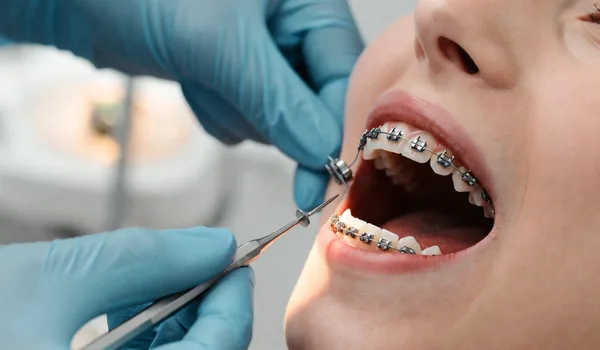
This appointment takes 1–2 hours. Your teeth are cleaned and etched (roughened with a mild acid solution), brackets are bonded to each tooth with dental adhesive, and archwires are threaded through the brackets. For Invisalign, you receive your first set of aligners and instructions on wear.
It doesn't hurt to get braces put on — you might feel some pressure when the wires are placed, but there's no drilling or injections.
Step 4: Adjustment appointments (every 4–8 weeks)
You'll visit the orthodontist regularly to have wires adjusted, elastics changed, and progress checked. Each visit takes 15–30 minutes. These adjustments are what actually moves your teeth — the wire applies continuous gentle force. Expect some soreness for 2–3 days after each adjustment. The timeline for these appointments is similar to how we track dental appointment durations — shorter than most people think.
Step 5: Debonding day (getting braces off)
The brackets are removed (painless — they pop off), adhesive is gently polished away, and your teeth are cleaned. The orthodontist takes final records and fits you for retainers. This appointment takes about 1 hour.
Pain and Discomfort: What's Normal
Let's be honest — braces aren't comfortable. But the pain is manageable and it's not constant. Here's the realistic timeline:
| When | What You'll Feel | How to Manage |
|---|---|---|
| Day 1 | Pressure, mild aching | Soft foods, over-the-counter pain relief |
| Days 2–5 | Peak soreness when biting | Ibuprofen, cold foods, orthodontic wax on irritating brackets |
| Week 2+ | Soreness fades significantly | You adapt quickly |
| After each adjustment | 2–3 days of mild soreness | Same as above — it lessens with each visit |
| Cheek/lip irritation | First 2–3 weeks (then calluses form) | Orthodontic wax, salt water rinses |
Tip: If you're experiencing difficulty sleeping due to dental pain, taking ibuprofen 30 minutes before bed and sleeping with your head slightly elevated can help.
Foods to Avoid (and What You Can Eat)
Avoid these ❌
- Hard foods: Nuts, hard pretzels, raw carrots (cut into small pieces instead), hard candy, ice
- Sticky foods: Caramel, taffy, gummy bears, Starburst, chewing gum
- Biting into whole foods: Don't bite into apples, corn on the cob, or whole chicken wings — cut them first
- Popcorn: Kernels get trapped under wires and brackets
- Sugary drinks: Not a food rule per se, but soda and juice sit around brackets and cause cavities that need fillings
Safe foods ✅
- Pasta, rice, soft bread, pancakes
- Yogurt, smoothies, mashed potatoes, soup
- Soft fruits (bananas, berries, melon)
- Cooked vegetables (steamed broccoli, mashed sweet potato)
- Eggs, soft cheese, tender meat cut into small pieces
- Ice cream, soft cookies, milkshakes (in moderation)
How to Care for Your Braces
Good oral hygiene with braces is non-negotiable. Brackets and wires create dozens of tiny traps for food and plaque. If you don't clean properly, you'll end up with white spots (decalcification), cavities needing fillings, or even gum disease by the time your braces come off.
Brushing with braces
- Brush after every meal (not just morning and night)
- Use a soft-bristle toothbrush angled at 45° toward the gumline
- Brush above the brackets, on the brackets, and below the brackets — three passes
- Use an interdental brush (Christmas tree brush) to clean between brackets and under the wire
- Spend at least 3 minutes (2 minutes isn't enough with braces)
Flossing with braces
Regular flossing is nearly impossible with wires in the way. Solutions:
- Floss threaders: Thread floss under the wire, then floss normally. Takes 10–15 minutes for a full mouth.
- Platypus flossers: Designed specifically for braces — fits between brackets without threading.
- Water flosser: A Waterpik on medium pressure is the fastest option. Same technology used to clean implants, and it works great for braces too.
Orthodontic wax
When a bracket or wire irritates your cheek or lip, pinch off a small piece of orthodontic wax and press it over the offending bracket. It creates a smooth barrier. Replace it after eating.
How Long Do Braces Take?
| Case Type | Typical Duration |
|---|---|
| Mild crowding/spacing | 6–12 months |
| Moderate crowding + bite correction | 12–24 months |
| Severe crowding + complex bite | 24–36 months |
| Adult treatment (same case) | Add 6–12 months |
| Clear aligners (mild-moderate) | 6–18 months |
What makes treatment faster?
- Following care instructions (not breaking brackets by eating the wrong foods)
- Wearing elastics as prescribed (this is the #1 factor patients can control)
- Attending all scheduled appointments
- Good oral hygiene (inflamed gums slow tooth movement)
What makes treatment slower?
- Broken brackets (every broken bracket adds 2–4 weeks)
- Not wearing elastics consistently
- Missing appointments
- Adult patients (denser bone = slower movement)
- Needing extractions to create space
After Braces: Retainers and Long-Term Care
Getting braces off isn't the end — it's the beginning of the retention phase. Without retainers, your teeth WILL shift back. This isn't a maybe. Teeth have memory and will try to return to their original position, especially in the first year after braces.
Types of retainers
- Hawley retainer: Wire and acrylic. Adjustable. The classic retainer.
- Essix retainer: Clear plastic tray (looks like an Invisalign aligner). Less visible but less durable.
- Permanent (bonded) retainer: A thin wire glued to the back of your front teeth. You never take it out. Requires extra flossing attention.
How long do you wear retainers?
The short answer: forever. Most orthodontists recommend full-time wear (22 hours/day) for the first 6–12 months after braces, then nightly wear indefinitely. Yes, indefinitely. If you stop wearing your retainer, your teeth will shift. Some movement happens within weeks. After months without a retainer, you may need braces again.
After-braces care tips
- Consider whitening strips after braces — your teeth may have color differences where the brackets were. Wait 2 weeks after removal before whitening.
- Schedule a dental checkup and cleaning within a few weeks of getting braces off.
- If your wisdom teeth haven't been addressed, discuss removal with your dentist — they can cause shifting.
- Wear your retainer. Seriously. Wear it.
Frequently Asked Questions
How much do braces cost on average?
The average cost of braces ranges from $3,000 to $7,000 depending on the type. Metal braces cost $3,000–$5,000, ceramic braces $4,000–$8,000, lingual braces $8,000–$10,000, and clear aligners like Invisalign $3,000–$8,000. Insurance may cover 25–50% of orthodontic costs.
What age is best to get braces?
The ideal age for a first orthodontic evaluation is 7, but most children get braces between ages 10–14 when permanent teeth have erupted. Adults can get braces at any age — about 25% of orthodontic patients today are adults.
How long do braces take to straighten teeth?
Most braces treatments take 12 to 24 months. Simple cases may finish in 6–12 months, while complex cases with severe crowding or bite issues can take up to 36 months. Treatment time depends on the severity of misalignment and patient compliance.
Do braces hurt?
Braces cause mild to moderate discomfort for 3–5 days after initial placement and after each adjustment. The pain is described as pressure or soreness, not sharp pain. Over-the-counter ibuprofen, orthodontic wax, and soft foods help manage discomfort during adjustment periods.
Explore Our Braces Articles
How to Know If You Need Braces
Signs, self-assessment checklist, and when to see an orthodontist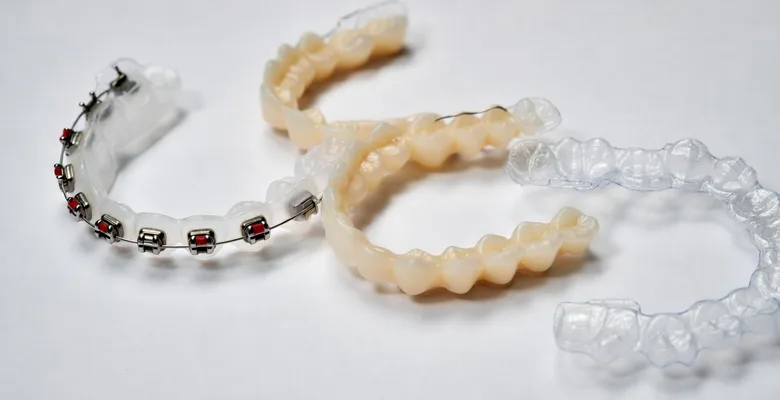
How Much Do Braces Cost in Texas?
City-by-city pricing, insurance tips, and ways to saveRelated topics you might find useful
- Fillings & Cavities Guide — Braces create areas harder to clean, so cavity prevention is critical
- Gum Health Guide — Keeping gums healthy is essential during orthodontic treatment
- Teeth Whitening Guide — Post-braces whitening to even out your smile
- Tooth Pain Guide — Managing discomfort during braces treatment
- Wisdom Teeth Guide — Often arise during or after orthodontic treatment
- Veneers Guide — Alternative for minor cosmetic improvements